This page was last updated May 8, 2012
Send questions, comments, and photos here.

LRT in
Minneapolis


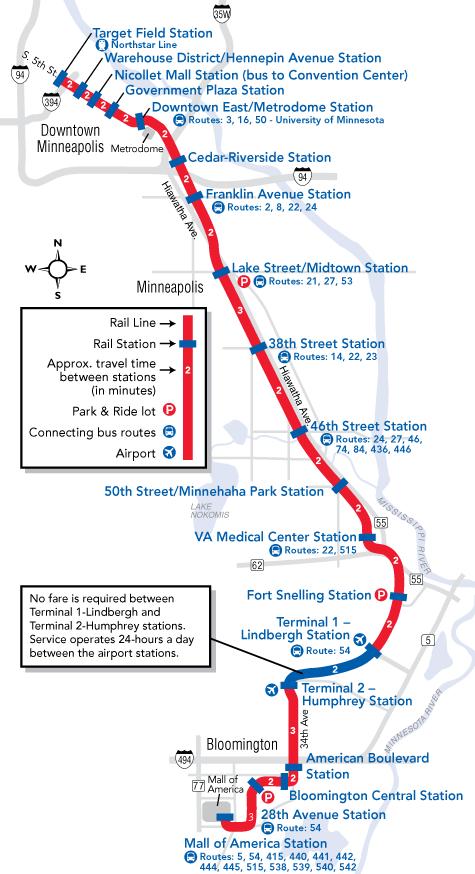
MetroTransit currently operates a single LRT line, known as the Hiawatha Line (route 55). This line runs from downtown Minneapolis south to the Mall of America in Bloomington, MN.
Contents
Toronto Comparison
The Hiawatha Line is possibly the best North American LRT to compare with Toronto's needs. It implements similar low floor technology that will be used in Toronto for both streetcar and LRT lines. The Hiawatha Line also provides very good examples of the ways that the right of way can be implemented:
- on-street, curb separated
- separated median in roadway
- parallel, side-of-the-road
- off street, fully separated right of way
- tunneled where necessary
- elevated where necessary
System Highlights and Route Details
Item Notes Number of lines 1 (another under construction) Total length 19.2 km Total stations 19 Right of way On street, with separate lanes; Median; Parallel to road; Separate at grade or elevated; Tunnel Loading Platform at door level (35 cm above track) Fleet 27 Bombardier FLEXITY Swift
(31 new vehicles to be ordered for Central Corridor)
Seats 66 - room for 120 standees
28.6 metres long (94')
4 sliding plug doors per side
90 km/h top speed
Low floor for 75% of seating space and at doors
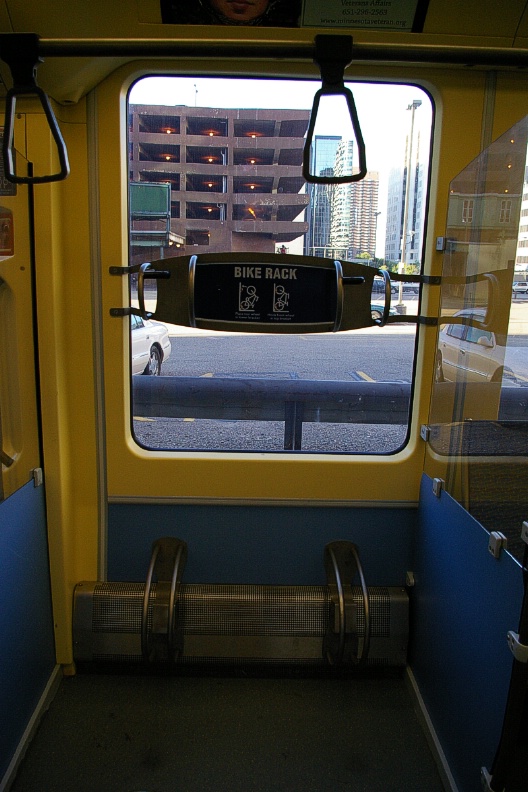
4 luggage racks and 4 bicycle hangers per carFare collection Self service, barrier free, proof of payment Fare integration Fares same as bus fares
Transfers valid between each for 150 minutesAirport service Direct service with one station at each terminal
LRT serves as a free connection between airport terminals 24 hours per day
| Hiawatha Line - Route 55 | |
| Length | 19.2 km (approximately) |
|---|---|
| Stations | 19 |
| Right of way | On street, separate lanes: 16% by trip duration Median: 14% by trip duration Parallel to road: 22% by trip duration Separate at grade or elevated: 40% by trip duration Tunnel: 8% by trip duration |
| Service frequency | 7.5 minutes rush hours (6-9 am, 3-6 pm) 10 minutes mid-day and on weekends 15 minutes early evenings (until 9 pm) 30 minutes late evenings and early mornings |
| Ridership | 10.5 million in 2010 |
| Opening | June 26, 2004 (Warehouse District to Fort Snelling) December 4, 2004 (Fort Snelling to Mall of America) November 16, 2009 (extension to Target Field) |
Ride Descriptions
Hiawatha Line - Route 55
Travel on the Hiawatha Line (Route 55) from downtown Minneapolis to the Mall of America in Bloomington takes approximately 39 minutes.
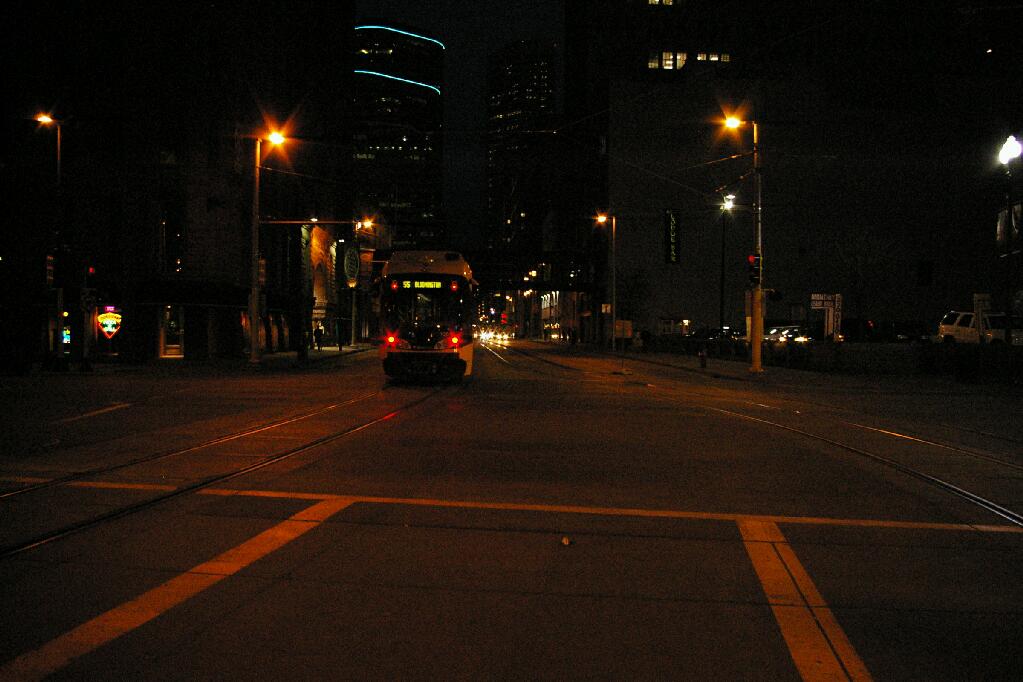
Running on South 5th Street, the LRT has its own reserved lanes separated from traffic by a curb. Most downtown streets in Minneapolis are one-way, with alternating streets running in opposite directions. Under this pattern, South 5th Street would be one-way in a north-west direction (referred to as northbound here) but there are a few exceptions:
From Park Avenue (at the Metrodome) for two blocks to South 5th Avenue, South 5th Street has one-way traffic northbound with one lane on either side of the LRT. The lane on the east side of the tracks ends and the next block only has a single lane on the west side of the tracks.
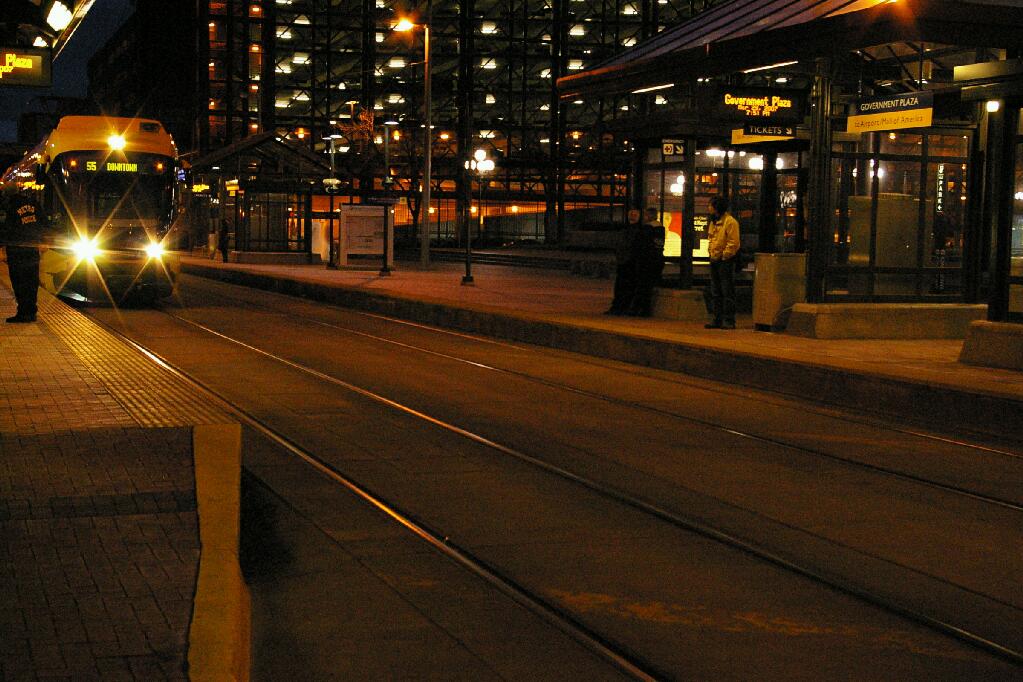
The Government Plaza station is between South 4th Avenue and South 3rd Avenue and there is no automobile traffic on this stretch of South 5th Street. This station is one of four with side platforms.
For three blocks from South 3rd Avenue to Nicollet Avenue South, South 5th Street is one-way for northbound traffic using a single lane on the west (left) side of the LRT.
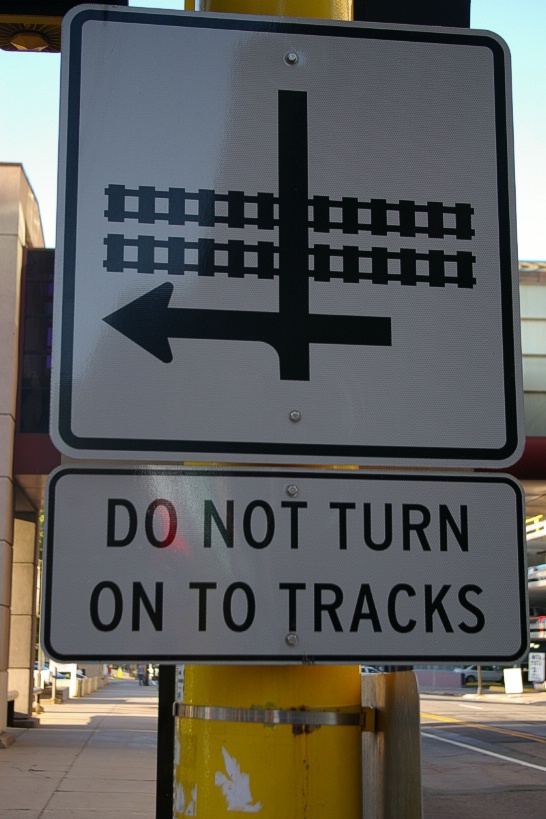
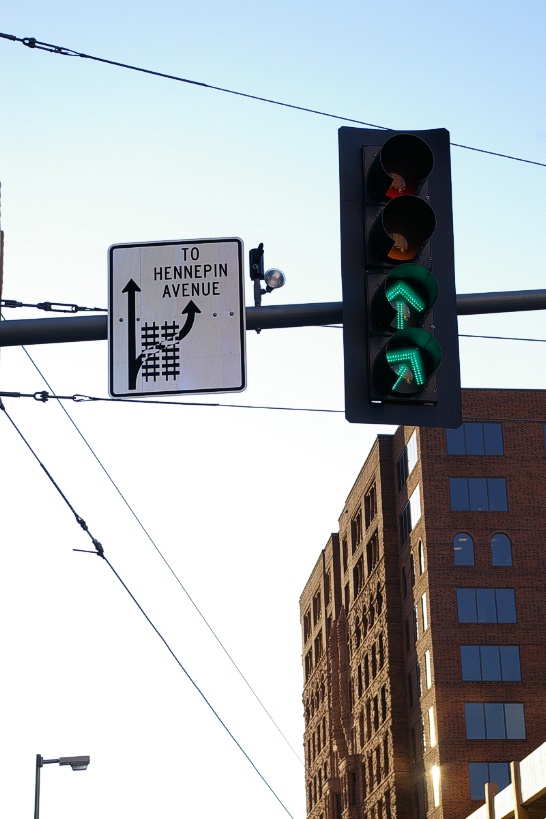
The block between Nicollet Avenue South and Hennepin Avenue has two-way traffic, with one lane on either side of the LRT. Traffic on the west (left) side of the LRT cannot make a turn onto Hennepin Avenue.
At Nicollet, northbound traffic may cross over the tracks to switch from west side to the east side. This is necessary if turning at Hennepin Avenue.
The Warehouse District/Hennepin Avenue station is between Hennepin Avenue and 1st Avenue North where South 5th Street is one-way northbound with the traffic on the west (left) side of the LRT.
Just north of the Downtown East/Metrodome station, the line enters its own separate right of way.
South of the Metrodome, the LRT crosses diagonally through an intersection and then enters its own separated right of way to cross over water and expressways. The first station on the separate right of way is Cedar/Riverside and the second is Franklin Avenue. Franklin Avenue station is located partly on an overpass.
The next four stations are on the west side of Hiawatha Avenue, where the line runs on a side-of-road right of way.
The first station, Lake Street/Midtown, is a fully elevated station as the line crosses over Hiawatha Avenue just to the north of the station.
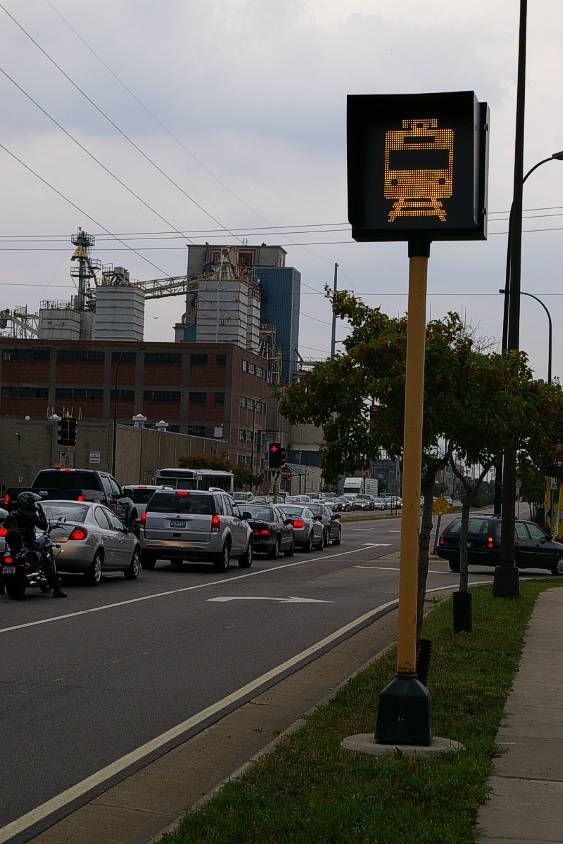
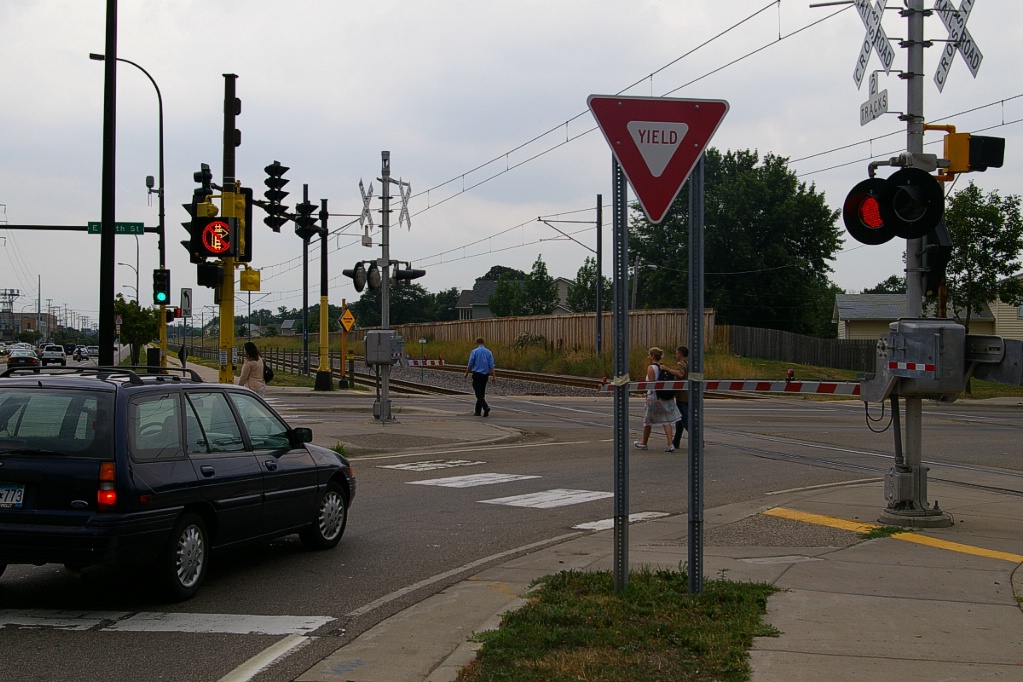
At the intersection, a lighted No Right Turn sign and crossing gates prevent traffic from passing until the LRT passes.
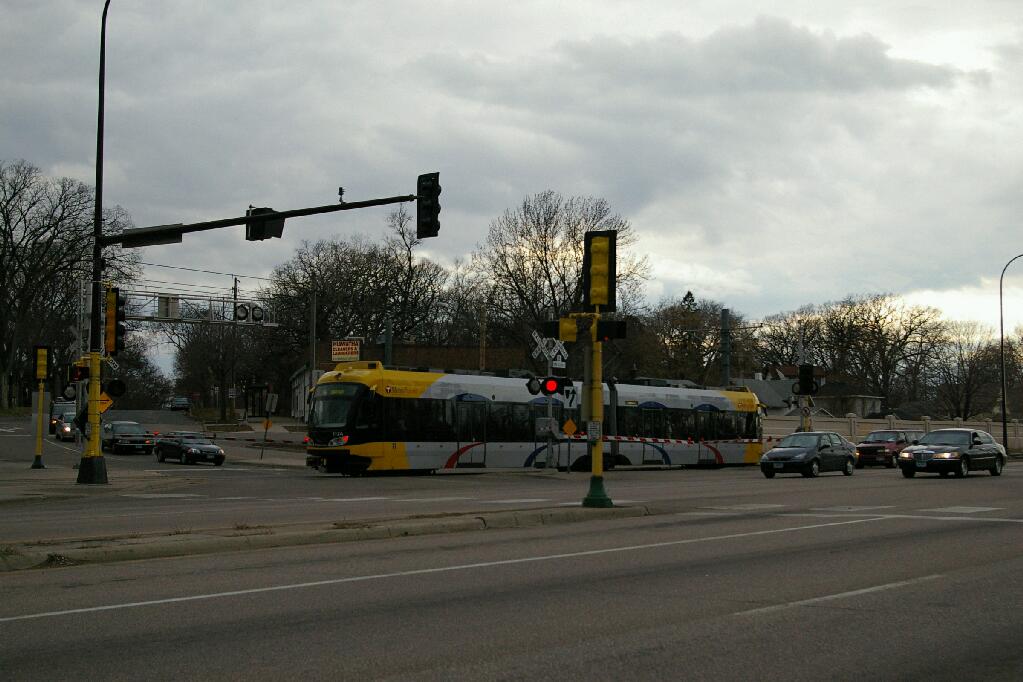
Traveling on the west side of Hiawatha Avenue, as it meets crossing streets, it has railway crossing type of signaling and priority. When the crossing signals are activated, no left turns for northbound traffic and no right turns for southbound traffic are permitted. Eastbound traffic on the connecting street has its stop line for the intersection on the west side of the LRT tracks, and no right turns on red are permitted.
South of the 50th Street/Minnehaha Park station, the line curves away from Hiawatha Avenue and moves onto a separated median along a small street for several blocks before returning to its own separate right of way just north of the VA Medical Centre station. Where the LRT enters and leaves the median, it does so with railway crossing protection.
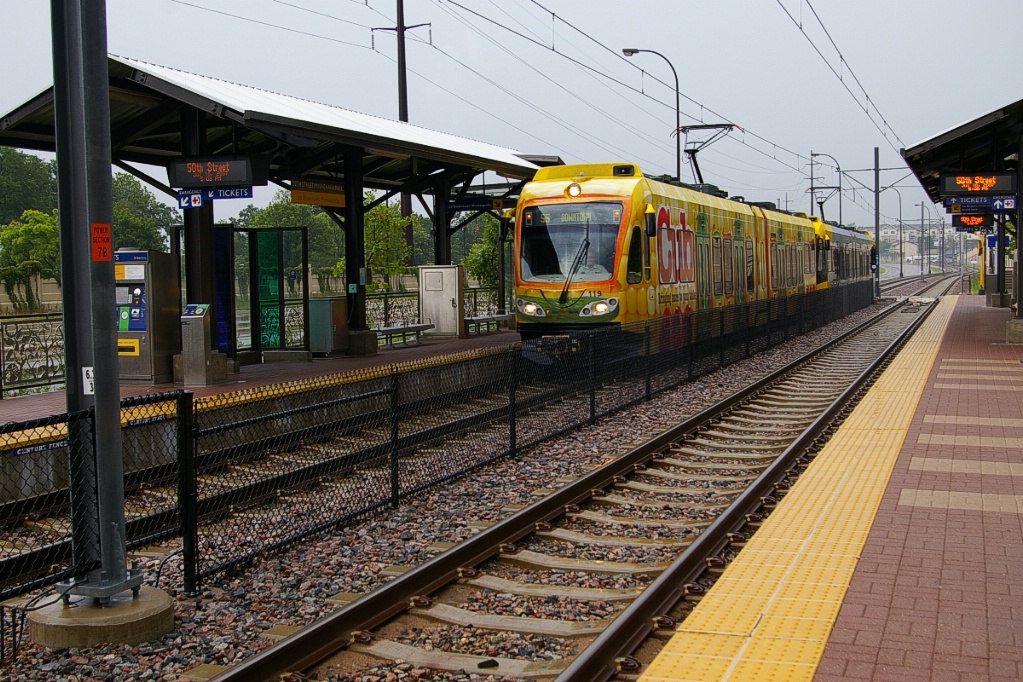
From here to just north of the airport it operates on its own separate right of way, occasionally elevated to pass over expressways. The LRT enters a tunnel for most of the airport grounds.
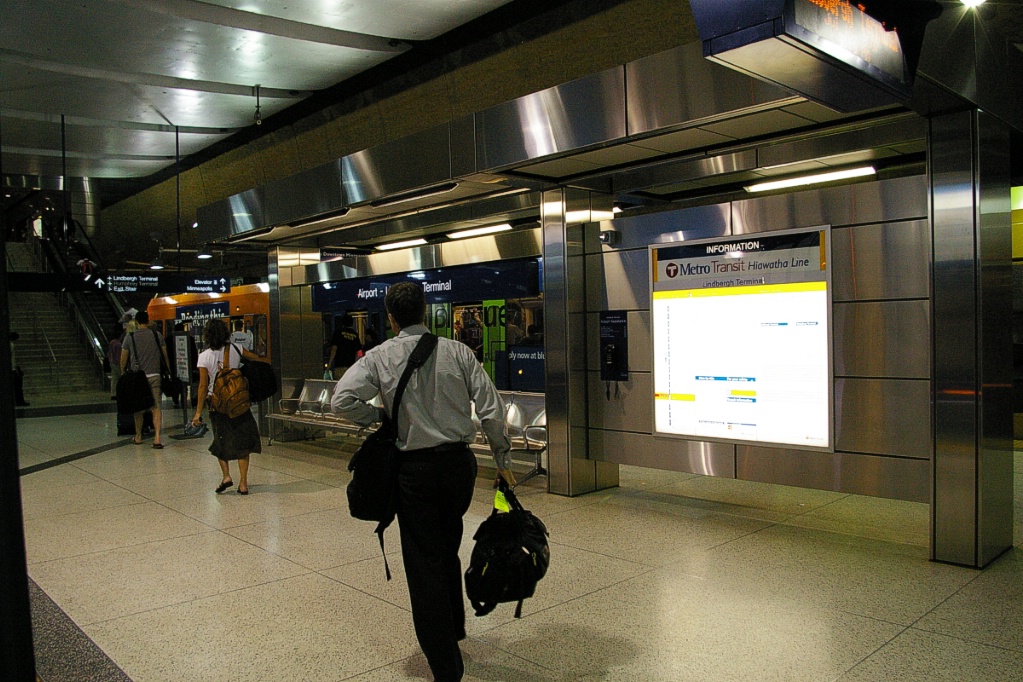
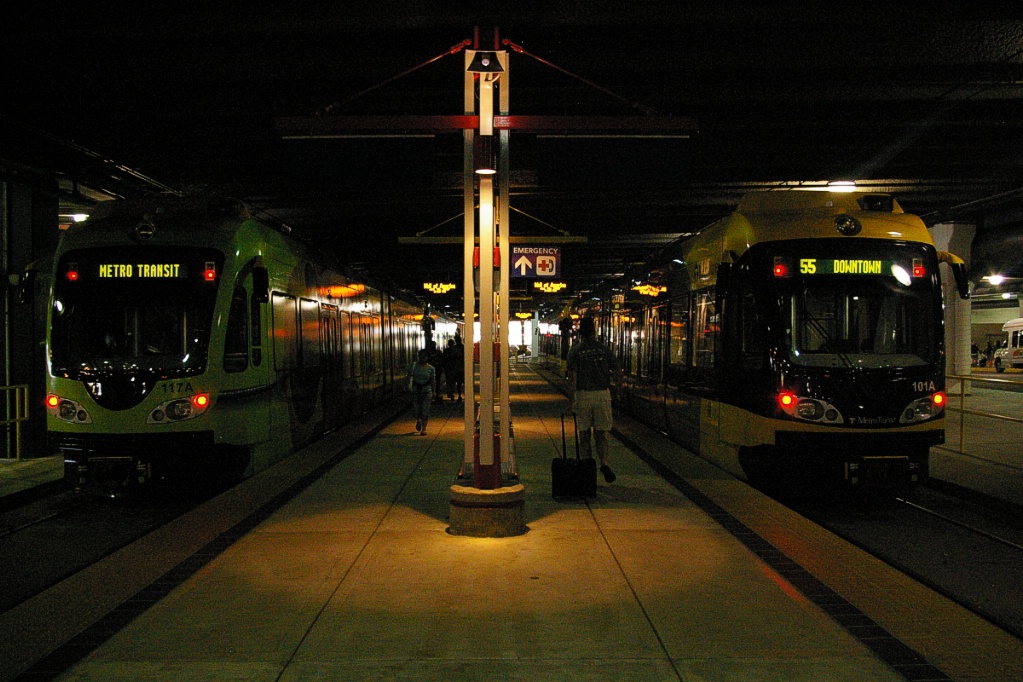
The next station, the Lindburgh Terminal station, is the only underground station on the system. The LRT returns to the surface just before entering the Humphrey Terminal station at the south end of the airport.
South of the airport, the LRT runs down 34th Avenue in a median right of way. Here it uses signals at intersections synchronized with traffic signals. These signals are so well synchronized that it is rare for an LRT to need to stop at a traffic intersection.
The LRT leaves the median by turning west through a railway style crossing protecting southbound traffic on 34th Avenue.
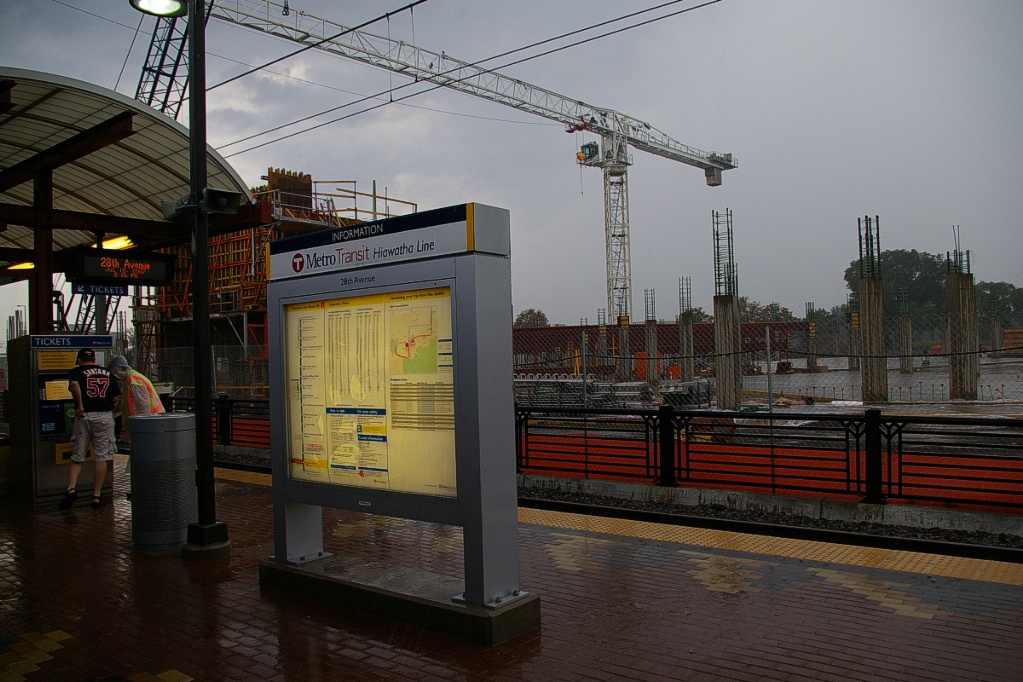
28th Avenue station.
From Bloomington Central station, through 28th Avenue station, to Mall of America station, the LRT operates on its own separate right of way, with a short portion near the mall parallel to a street.
The Mall of America station is located under the parking structure at the east end of the mall along with transfer facilities to several local bus routes.
Fares and Fare Collection
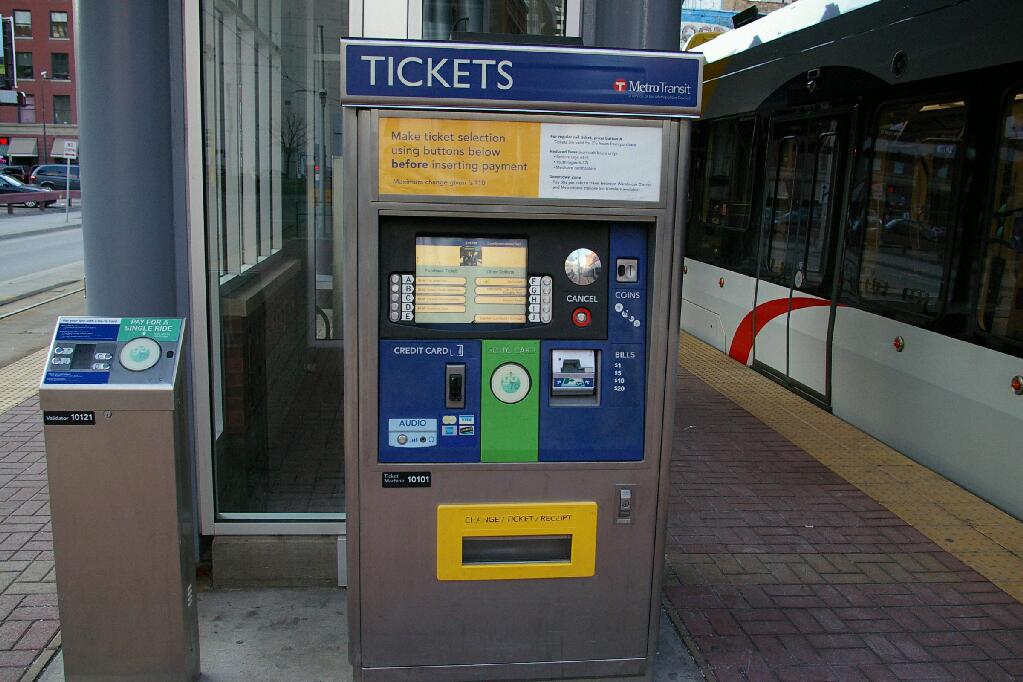
Fares may be purchased from vending machines on LRT platforms, or with exact cash when boarding a bus. A fare is valid for 2.5 hours from time of purchase and may be used on both busses and the LRT. When purchased on a bus, the ticket is labeled "transfer".
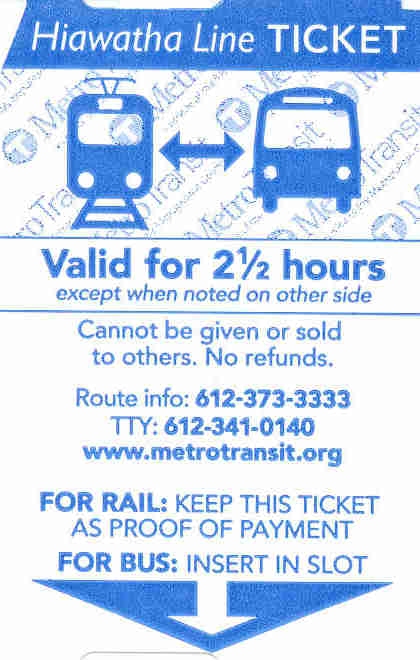
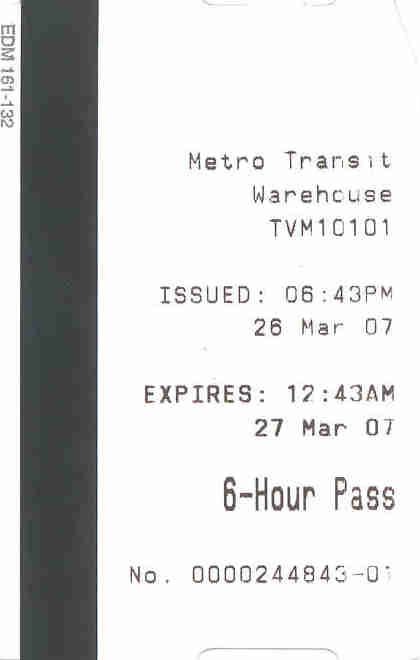
Adult fare is US$2.25 during rush hours (Monday to Fridays 6-9 am and 3-6:30 pm) and US$1.75 at other times.
Multiple purchase tickets are not available, but a storred value card called the Go-To card provides a 10% discount off the cash fare. A rewards program is tied to the Go-To usage. A 10-ride disposable version of the Go-To card is also available.
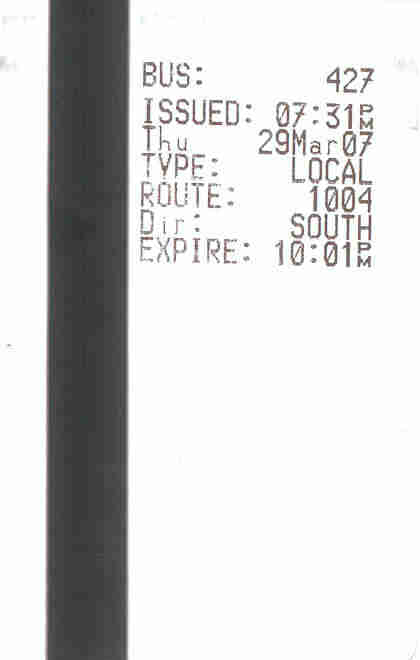
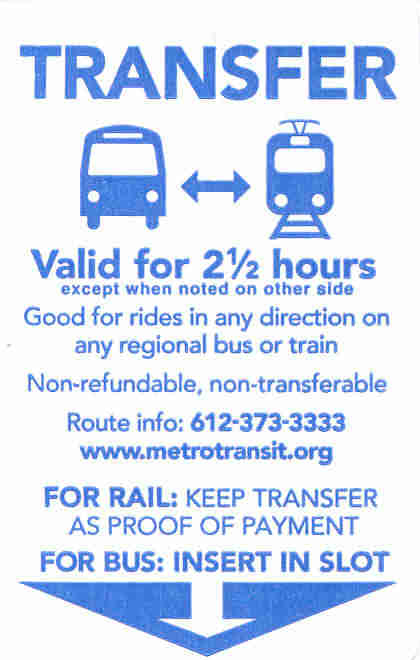
A downtown zone fare of 50 cents is available for a single ride downtown with no transfer privileges.
A 31-day pass is US$59 for non-rush hour use, or US$85 for any time. A 7-day pass is US$22 and is useable at any time.
Random fare inspections take place on the LRT. The fine for being caught without a valid fare is US$180.
Accessibility
Since Minneapolis uses low floor LRVs, access is simple to all trains as platform height matches floor height at vehicle doors.

Other Notes
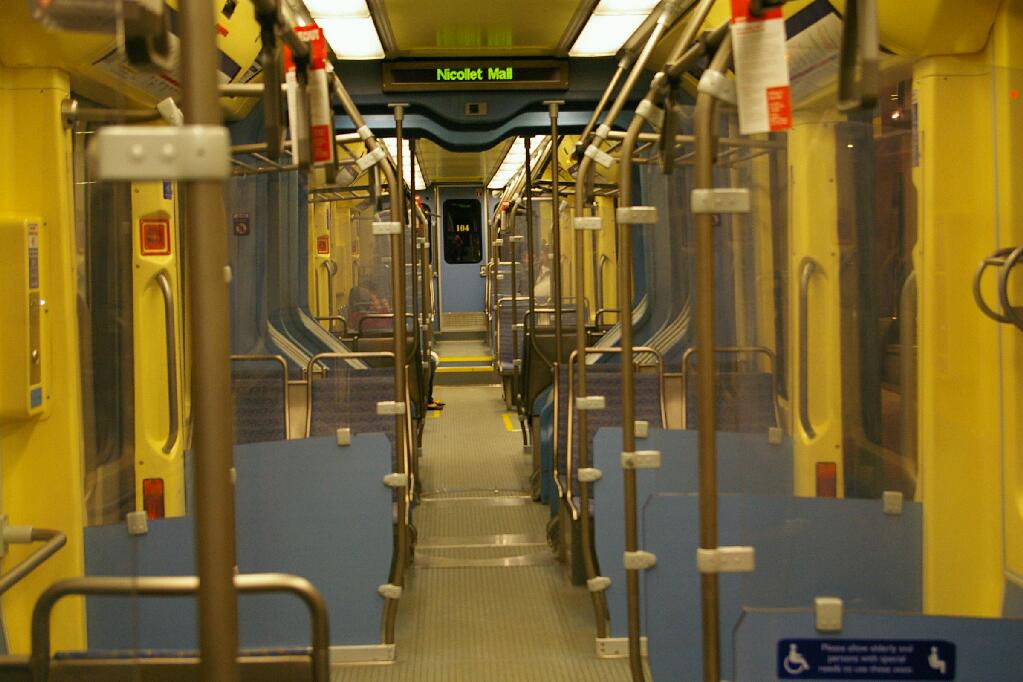
Most of the interior is fully accessible. The exception to this is a few seats at each end of the car that are a step up from the floor level of most of the car.
These LRVs are 94 feet long (28.6 metres) and are manufactured by Bombardier. Each car has 66 seats and can hold an additional 120 standing passengers.
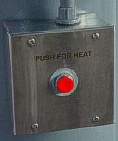
Like Toronto, Minneapolis can be cold in winter. The photo to the left shows the push button to activate the heater in a shelter at the Warehouse District/Hennepin Avenue station in downtown Minneapolis.
|
Each car has four luggage racks and four bicycle racks. |
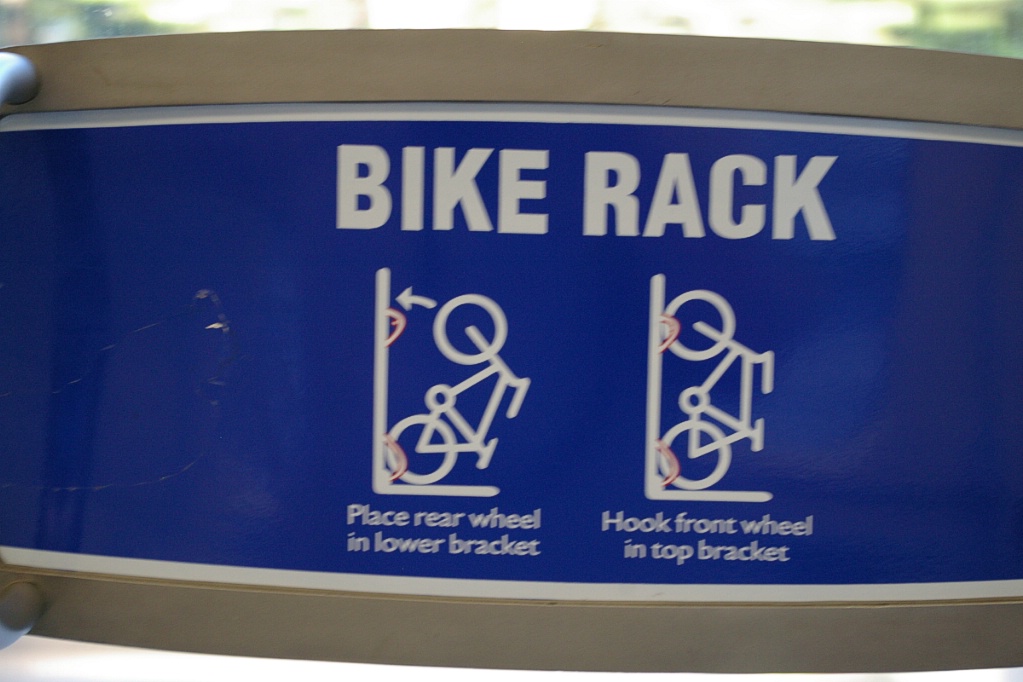
Bike rack instructions.
|
 |
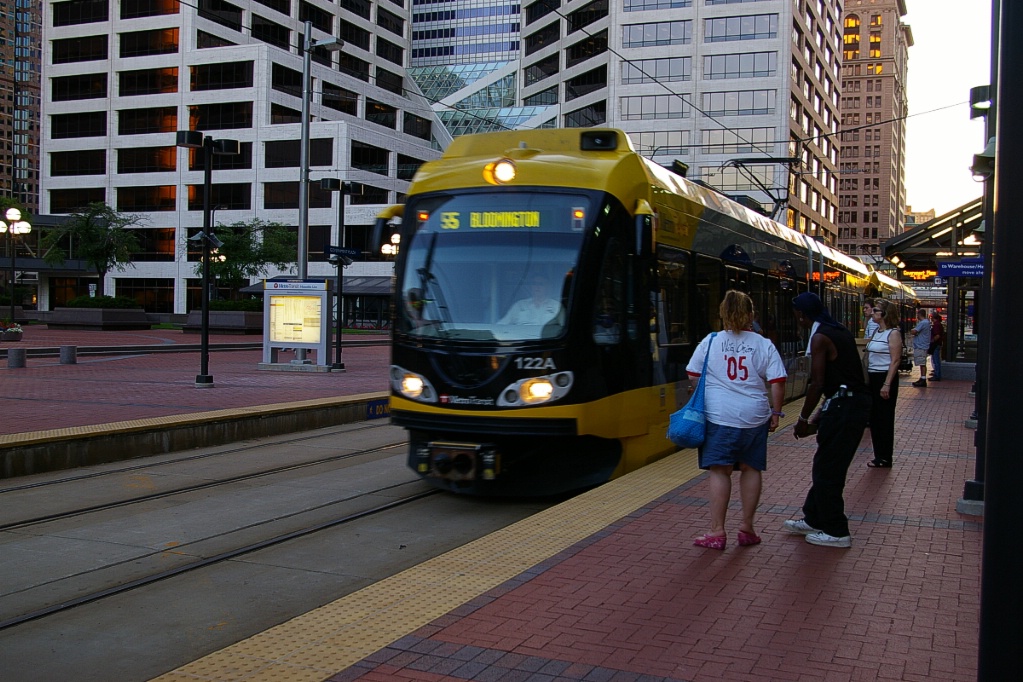
The flexible operation of LRT, compared to streetcars, is that it is easy to operate in either direction on a single track when needed. The photo to the right shows a southbound LRT arriving at Government Plaza station on the east track on July 19, 2007 when trackwork was being performed on the west track.
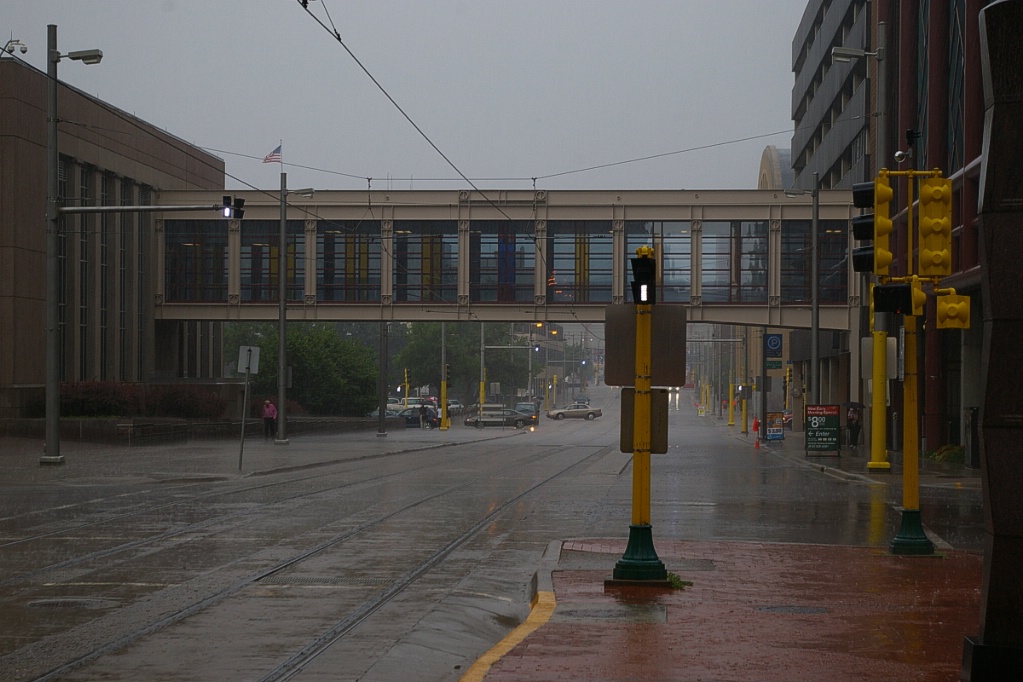
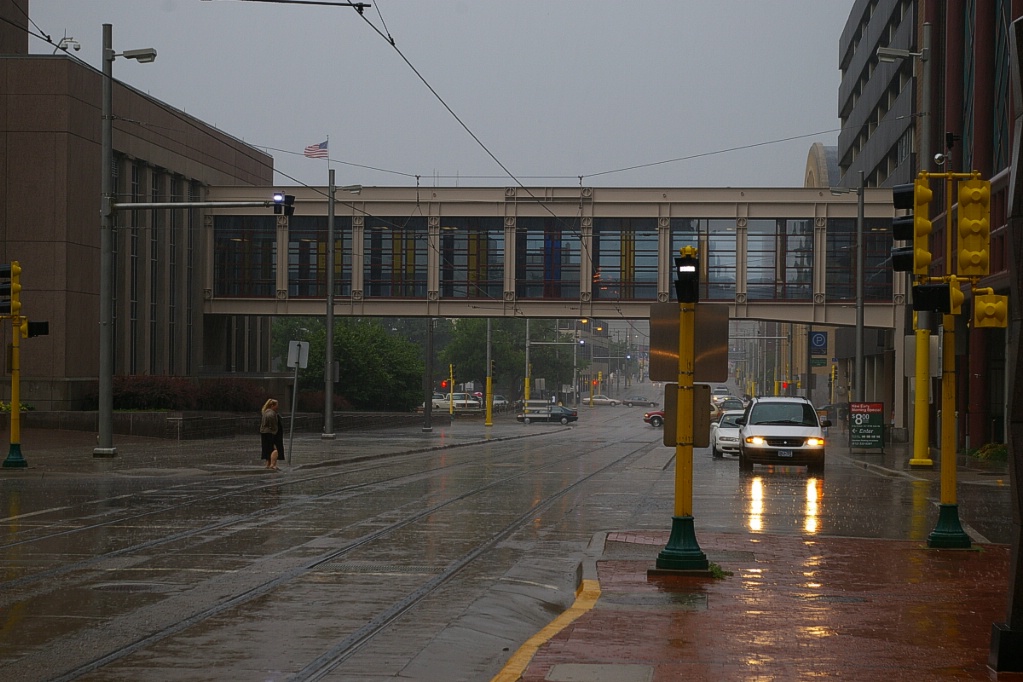
Where the LRT requires signals at traffic intersections, the signals for the LRT use a vertical white bar for proceed or a horizontal white bar for stop. This prevents confusion with the red-yellow-green signals for vehicle traffic.
Instead of a "yellow" signal, the vertical white bar will flash for a short period before the signal changes.
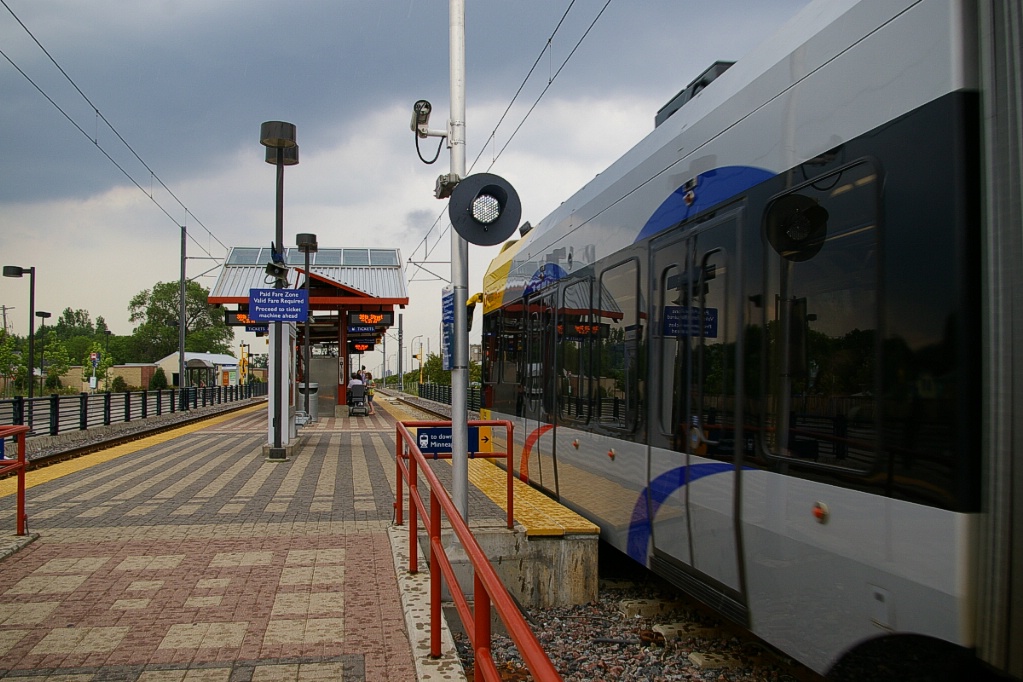
Where the LRT crosses streets with railway-style protection, a flashing white signal indicates to the LRT operator that a railway-type crossing is fully activated and stopping traffic, as shown in the photo to the right.
Current and Planned Expansion
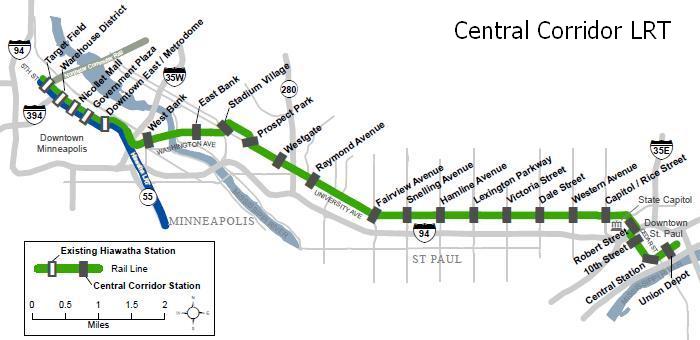
Central Corridor
Construction is underway for the Central Corridor LRT, a 17.6 km line connecting downtown Minneapolis with downtown St. Paul.
This line is expected to open in 2014.
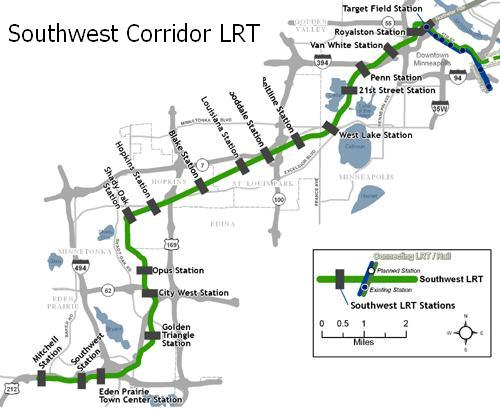
Southwest Corridor
Engineering planning for a 24 km Southwest Corridor LRT from downtown Minneapolis to Eden Prarie is underway. This would be an extension to the Central Corridor project.
Construction of this line is expected to be from 2014-2017 with the line opening in 2018.