Updates and many photos courtesy of James Greenhalgh
This page was last updated December 20, 2012
Send questions, comments, and photos here.

LRT in
Dallas


The transit system in Dallas (and 12 surrounding cities) is operated by an agency known as DART, Dallas Area Rapid Transit. In addition to the bus and LRT (DART Rail) system in Dallas, DART is responsible for the HOV lanes on expressways around Dallas and shares responsibility with Fort Worth Transportation Authority (The T) in operating Trinity Rail Express (TRE).
DART Rail currently operates three lines referred to by colour: Red, Blue, Green,and Orange. These three lines are interlined in downtown Dallas. The Red Line and Blue Line have an across-the-platform connection with TRE at Union Station, while the Green Line and Orange Line have a TRE connection at Victory station. Current transit facilities to DFW are served by a short shuttle bus between the airport and the Centre Port/DFW Airport station on TRE.
Contents
Toronto Comparison
DART Rail predates low floor technology, and uses high floor vehicles with steps to a low loading platform. In the past, wheelchair/stroller access had been provided by a high-level platform and bridge located at the front of the train behind the operator's cab. The LRV manufacturer has developed a new middle section that has been retro-fitted to provide low-level boarding. DART Rail does provide a good example of some ways that the right of way can be implemented:
- fenced-in surface ROW and elevated sections
- downtown transit mall
- short tunnel sections
System Highlights and Route Details
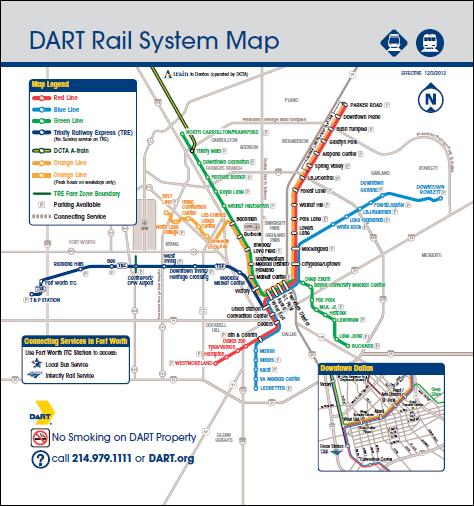
Item Notes Number of lines 4 Total length 115.2 km Total stations 55 Loading Low level platform, cars have steps
Platform 20 cm above rails,
step up 20 cm to car, 3 more steps up
Platforms raised 12 cm for level boarding
with low centre section of carsFleet 115 DART vehicles by Kinkisharyo
converted to SLRT configuration
Seats 100 passengers, room for 100 standing
5 sliding doors per side (originally 4)
104 km/h top operating speed
37.7 m (124') long double articulated, 8-axle
(originally 28.25 m, 6-axle)Fare collection Self service, barrier free, proof of payment Fare integration Common fare throughout DART system
Transfers valid on LRT and buses for 90 minutes
Transfer valid on TRE with upgradeRidership 64,300 per weekday Airport service No direct service
(TRE station close to DFW has shuttle bus)
Orange line under construction to serve DFW
starting December 15, 2014
| Red Line | |
| Length | 46.9 km |
|---|---|
| Stations |
25 |
| Right of way |
Private fenced for much of route |
| Service frequency | 10 minutes rush hours (6:30-9:00 am, 4:00-6:00 pm weekdays) 20 minutes most other times (approx 5:30 am to 12:30 am all days) |
| Opening |
June 14, 1996 |
| Blue Line | |
| Length | 36.7 km |
|---|---|
| Stations |
20 |
| Right of way |
Private fenced for much of route |
| Service frequency | 10 minutes rush hours (6:30-9:00 am, 4:00-6:00 pm weekdays) 20 minutes most other times (approx 5:30 am to 12:30 am all days) |
| Opening | June 14, 1996 Morrell to Pearl (0.7 km branch to Morrell); revenue service June 24 May 31, 1997 4.8 km south to Ledbetter September 27, 1999 operation extended from Pearl to Mockingbird December 18, 2000 Cityplace station added in tunnel section September 24, 2001 4.8 km northeast to White Rock May 6, 2002 5.6 km north-east to LBJ/Skillman November 18, 2002 6.4 km east to Downtown Garland November 14, 2004 Victory station added downtown; added Lake Highlands station December 3, 2012 7.2 km east to from Downtown Garland to Rowlett |
| Green Line | |
| Length | 46 km |
|---|---|
| Stations | 24 4 are shared with all lines 6 are shared with Orange line alone |
| Right of way | At grade |
| Service frequency | 10 minutes rush hours (6:30-9:00 am, 4:00-6:00 pm weekdays) 20 minutes most other times (approx 5:30 am to 12:30 am all days) |
| Opening | September 14, 2009 New line from Pearl to MLK Jr. (non-revenue on September 12) December 6, 2010 11.8 km southeast to Buckner 26.2 km northwest to North Carrollton/Frankford |
| Orange Line (selected weekday trips only) | |
| Length | 22.4 km (Bachman to DFW extension) |
|---|---|
| Stations | 23 4 are shared with all lines 2 are shared with Red and Blue lines 11 are shared with Red line alone 6 are shared with Green line alone |
| Right of way | Mix of private and elevated. |
| Service frequency | Selected weekday trips to Bachman. Full service to be determined. |
| Opening |
December 6, 2010 |
Ride Descriptions
Due to interlining, providing a description of a trip on each line would repeat many portions. The descriptions will be broken up into corridors:
| Corridor | Notes | Opened |
|---|---|---|
| Northeast Red Line | From Parker Road to Union Station | June 14, 1996 to Pearl January 10, 1997 to Park Lane July 1, 2002 to Galatyn Park December 9, 2002 to Parker Road |
| Northeast Blue Line | Downtown Garland to Mockingbird | June 14, 1996 to Pearl September 27, 1999 to Mockingbird September 24, 2001 to White Rock May 6, 2002 to LBJ/Skillman November 18, 2002 to Downtown Garland |
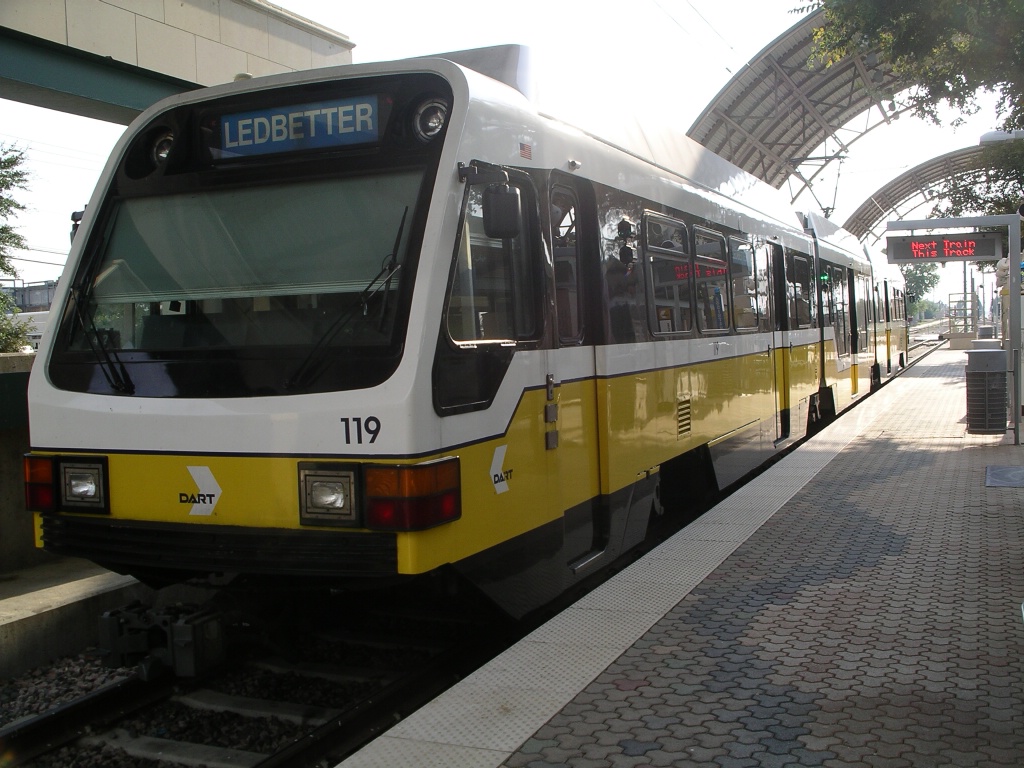
| South Blue Line | Union Station to Ledbetter | June 14, 1996 to Morrell May 31, 1997 to Ledbetter |
| Southwest Red Line | 8th & Corinth to Westmoreland | June 14, 1996 |
| North Green Line |
North Carrollton/Frankford to Victory |
December 2010 |
| Southeast Green Line |
Pearl to Buckner |
September 14, 2009 to MLK Jr. December 2010 to Buckner |
Northeast Red Line
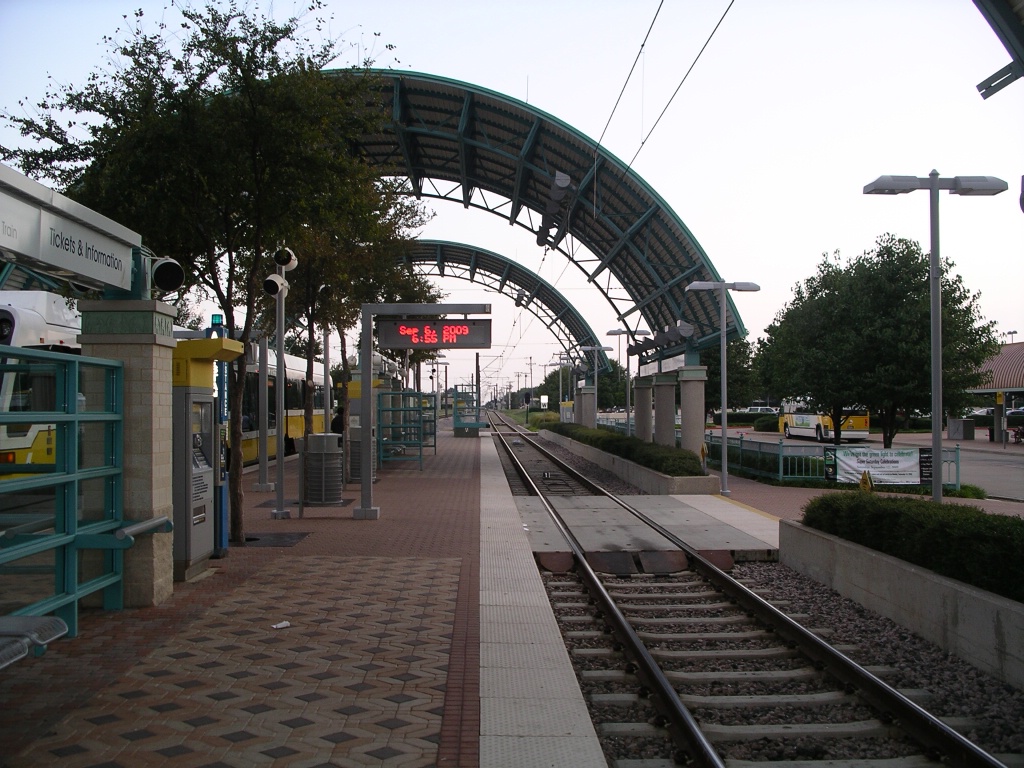
The entire trip on the Red Line from Parker Road to Westmoreland takes approximately 66 minutes. The trip from Parker Road to Union Station takes about 47 minutes.
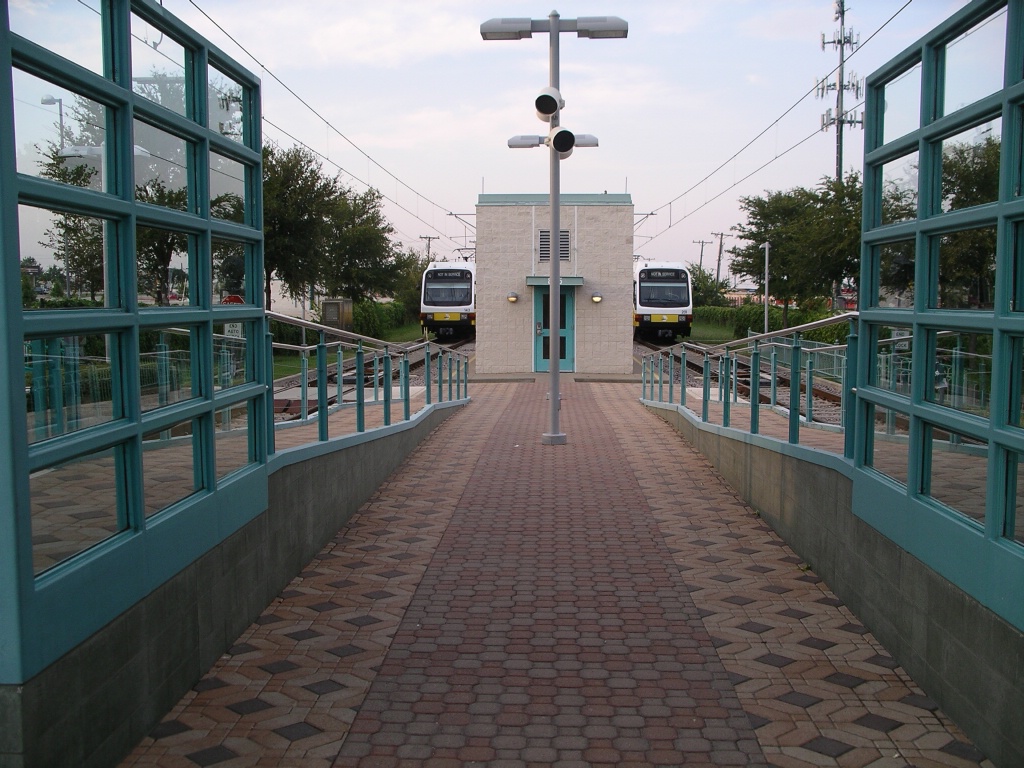
The northern terminus of the Red Line is Parker Road. This station is at-grade with an island platform and parking for 1555 cars. Prior to the opening of DART Rail to this station, the site was known as the East Plano Transit Center. The ticket scan in the Fares and Fare Collection section was issued at this station, though it says "East Plano" on it.
The next three stations are all side platform stations. Downtown Plano has no parking space on its property, though parking facilities in downtown Plano are within walking distance. Bush Turnpike has 778 parking spaces and two bicycle racks, while Galatyn Park has no parking for cars, but two bicycle racks.
The next two stations have an island platform. Arapaho Center has space for 1100 cars, and Spring Valley has space for 403 cars. They both have one bicycle rack and two bicycle lockers.
LBJ/Central station has side platforms and parking space for 568 cars. There is one bicycle rack and one locker.
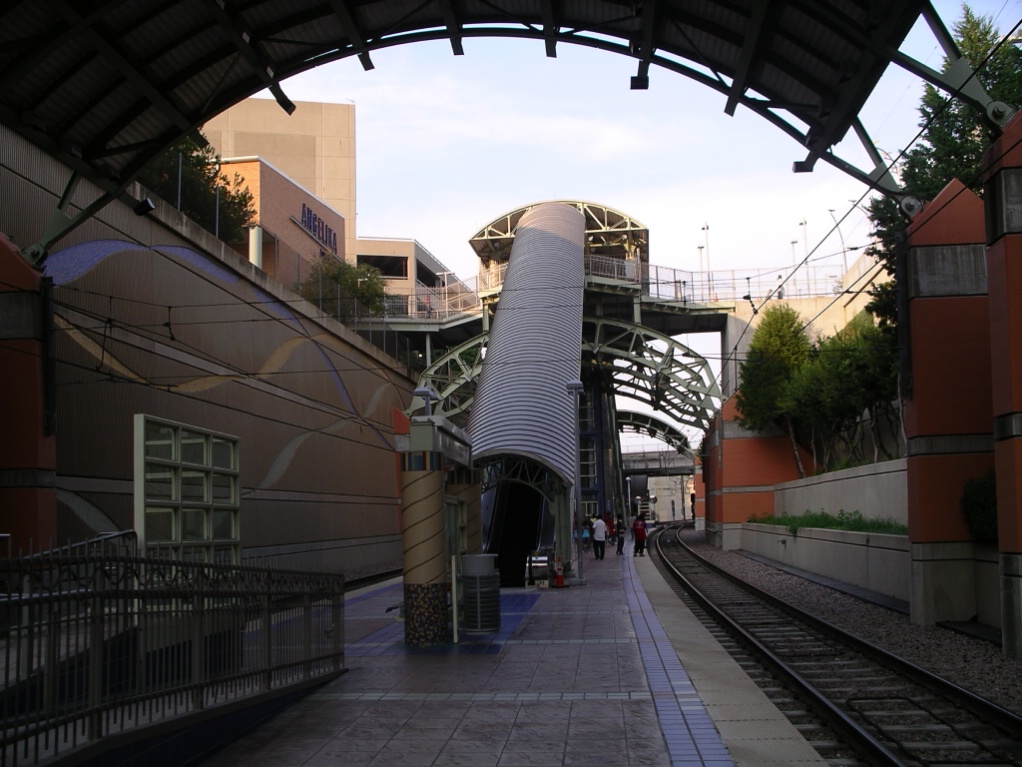
The next three stations all have island platforms. Forest Lane has parking space for 271 cars, two bicycle lockers and one rack. Walnut Hill has 208 parking spaces, and one bicycle locker and one rack. Park Lane is an elevated station that has space for 1200 cars, and two bicycle lockers and one rack. The original Park Lane station that opened with the 1997 extension of the Red Line was an at-grade station. It was replaced by the current elevated station with a further extension in 2002.
The next station, Lovers Lane, has side platforms, no parking, four bicycle lockers and one bicycle rack.
Moving south, the Blue Line joins with the Red Line just before reaching Mockingbird station. It has a centre island platform and is located in a trench slightly below the surrounding grade. There is space for 708 cars along with six bicycle lockers and nine racks. This station has the highest population density within three miles of any mass transit station in Texas.
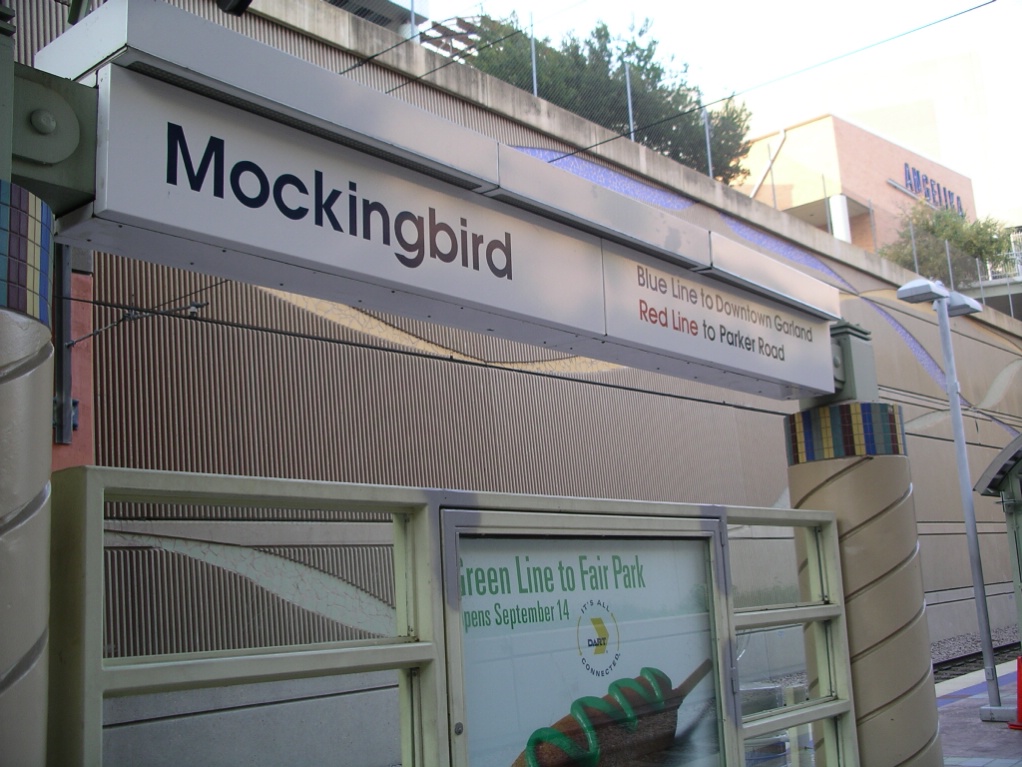
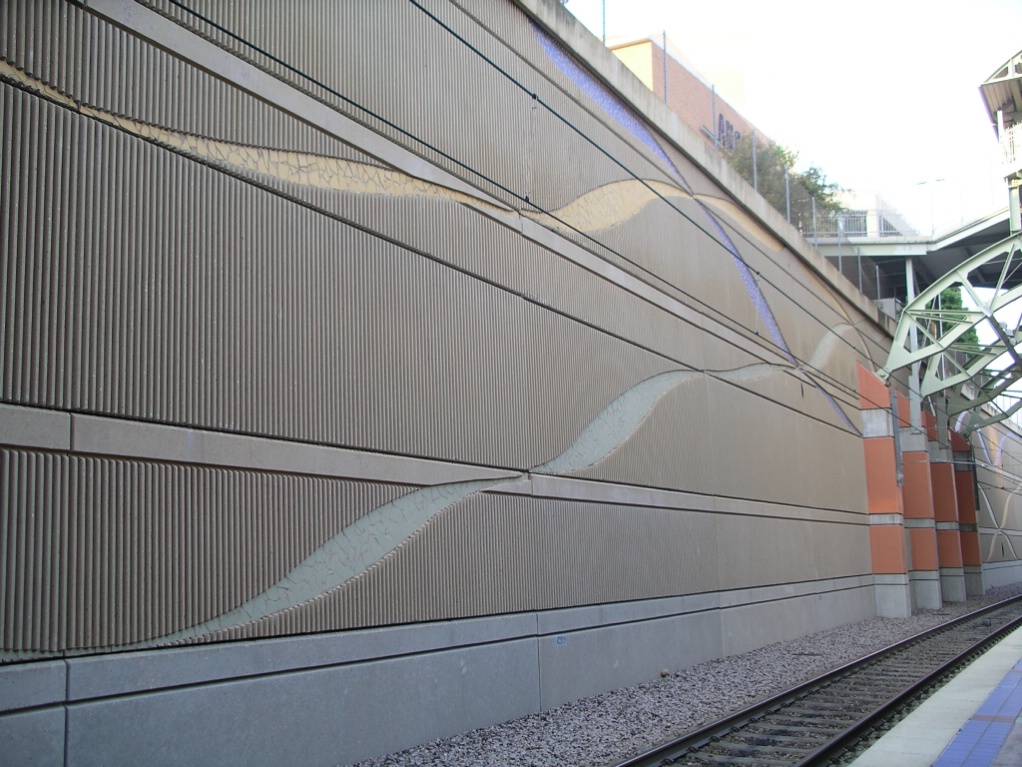
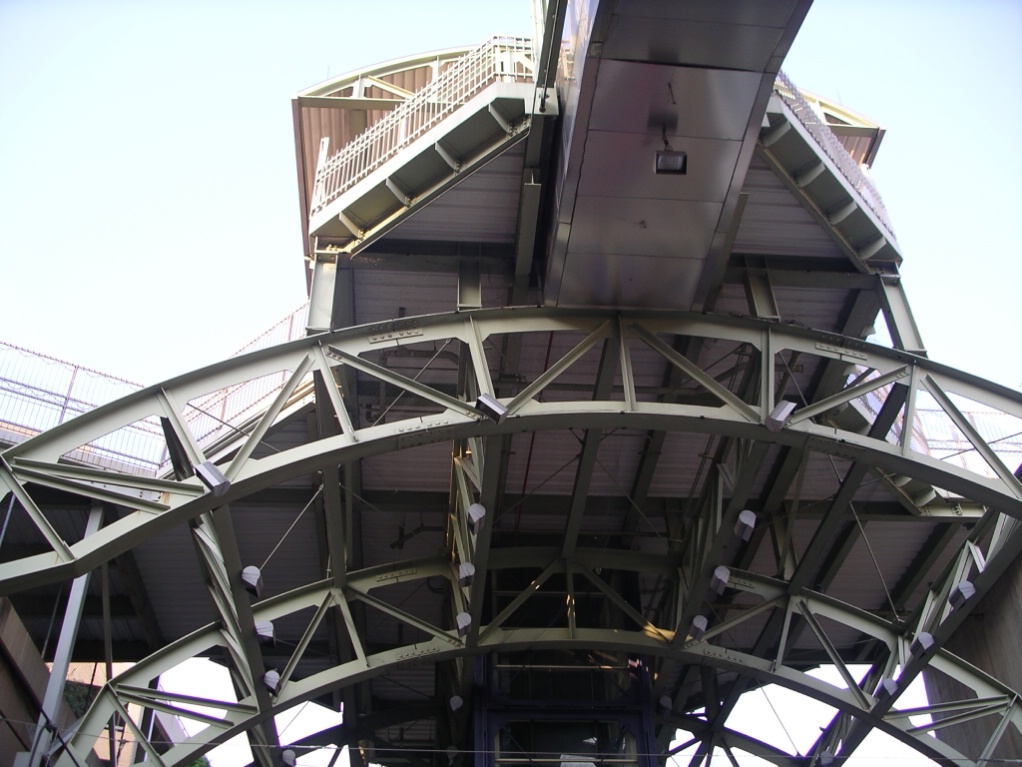
Some images at Mockingbird station.
|
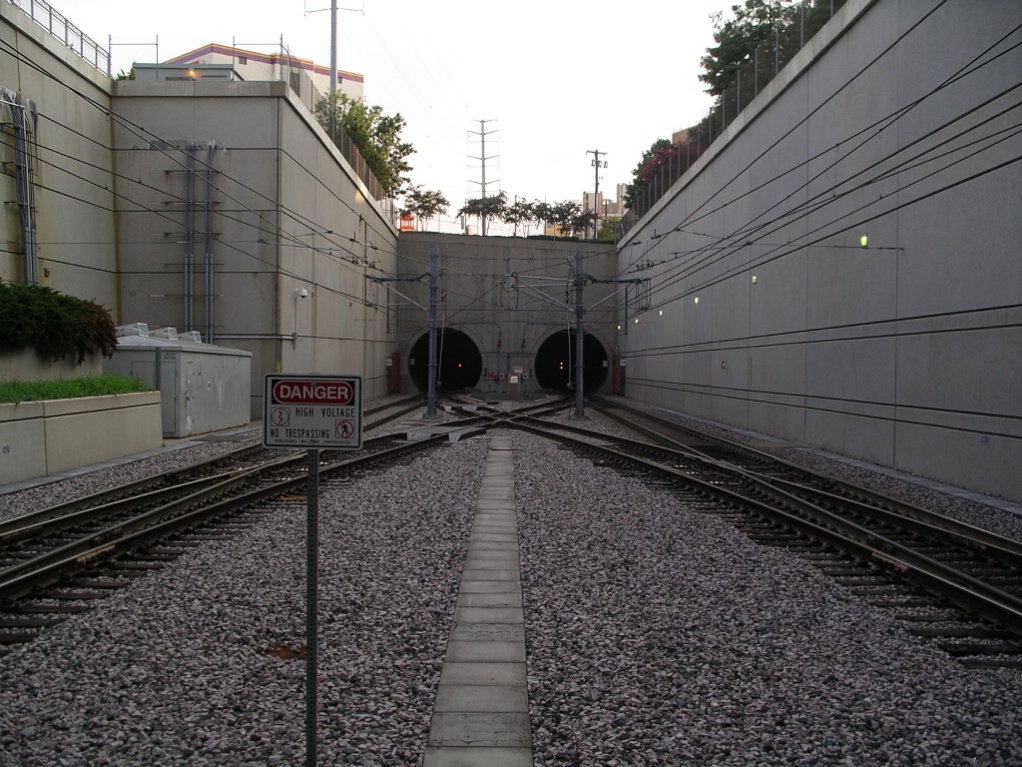
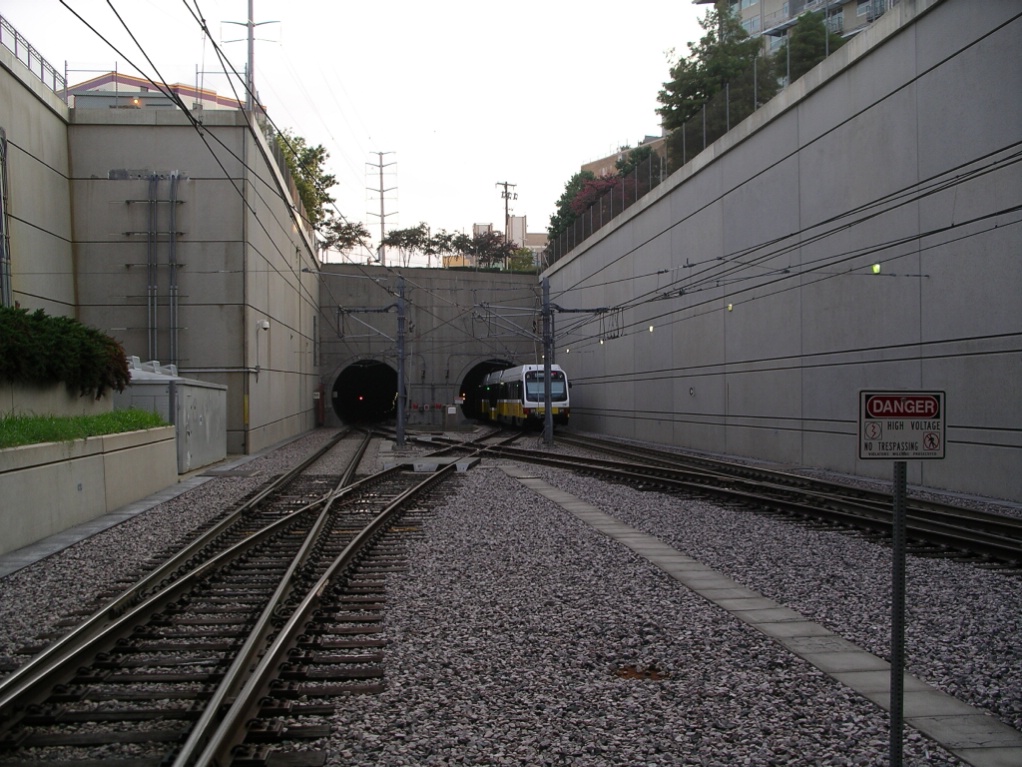
to the tunneled section between here and Pearl.
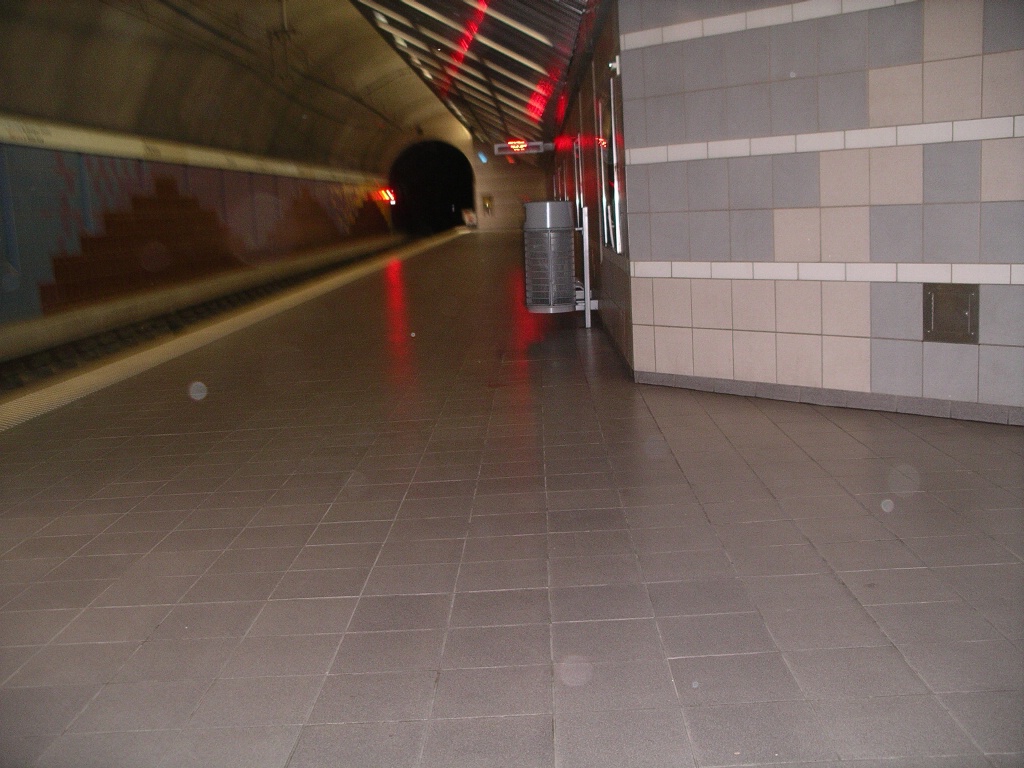
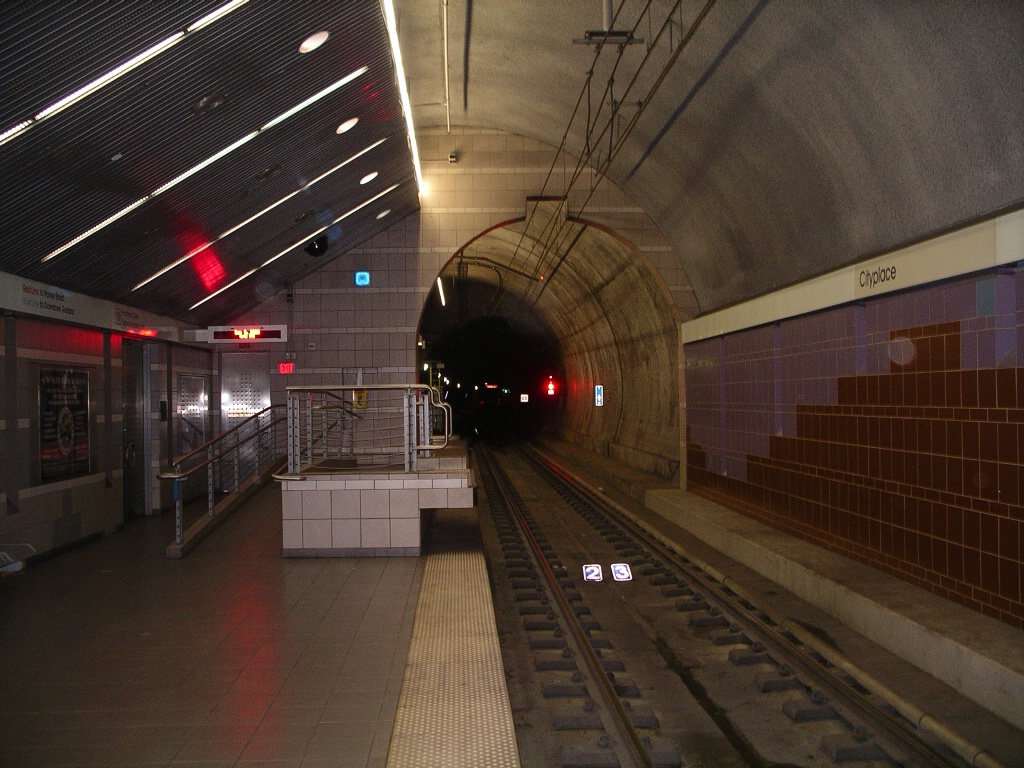
South of Mockingbird station, the line enters a tunnel and remains underground until just before reaching Pearl station downtown.
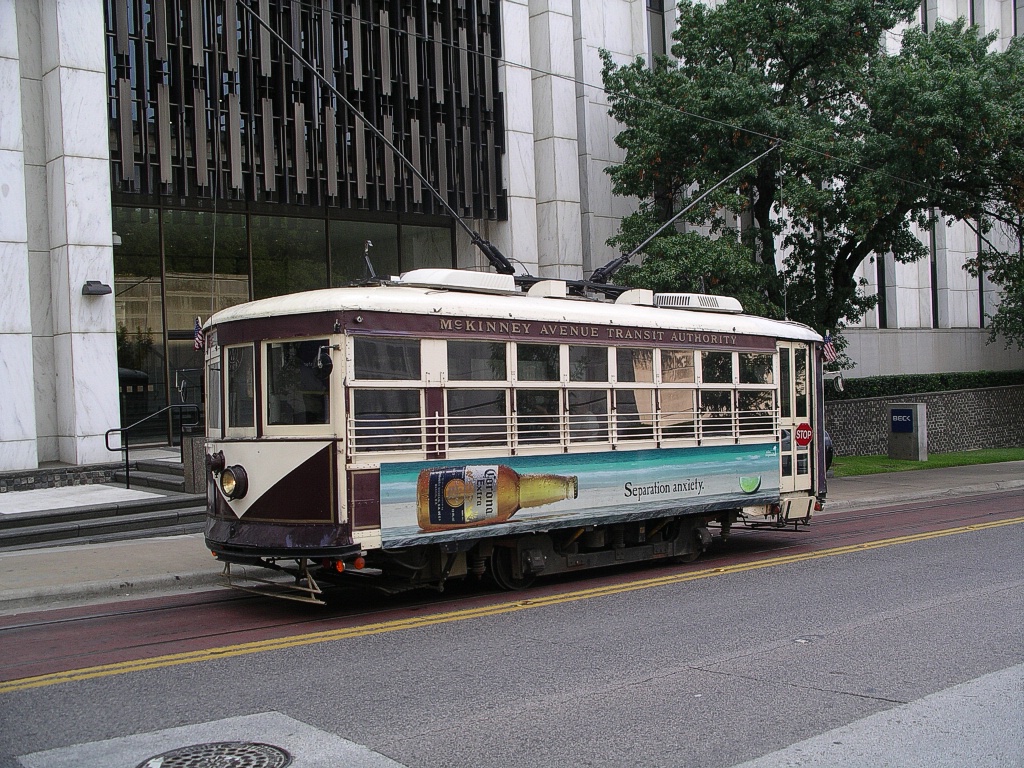
Cityplace station is an infill station (i.e.: added to the line after it opened) and was the first public subway station in the southwestern USA. It is also the only DART Rail station where a transfer can be made to the McKinney Avenue Transit Authority's M-Line streetcar.
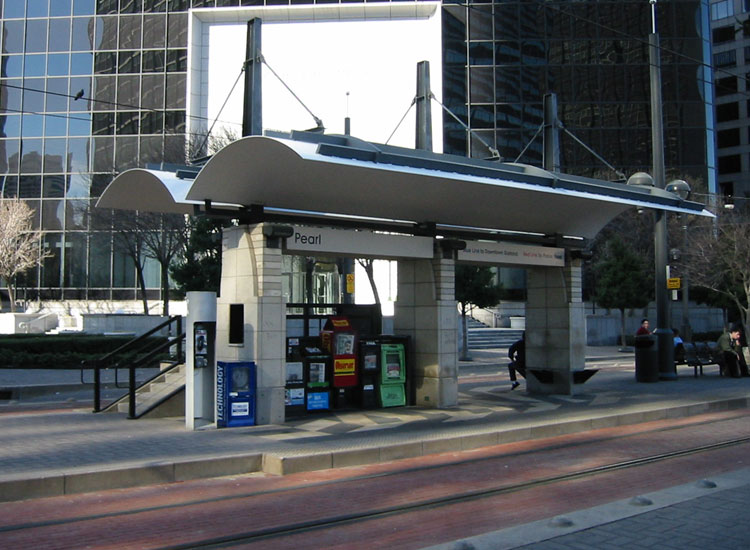
This older photo of Pearl station shows the platforms before being raised to
provide level boarding with the new centre sections added to LRVs.
|
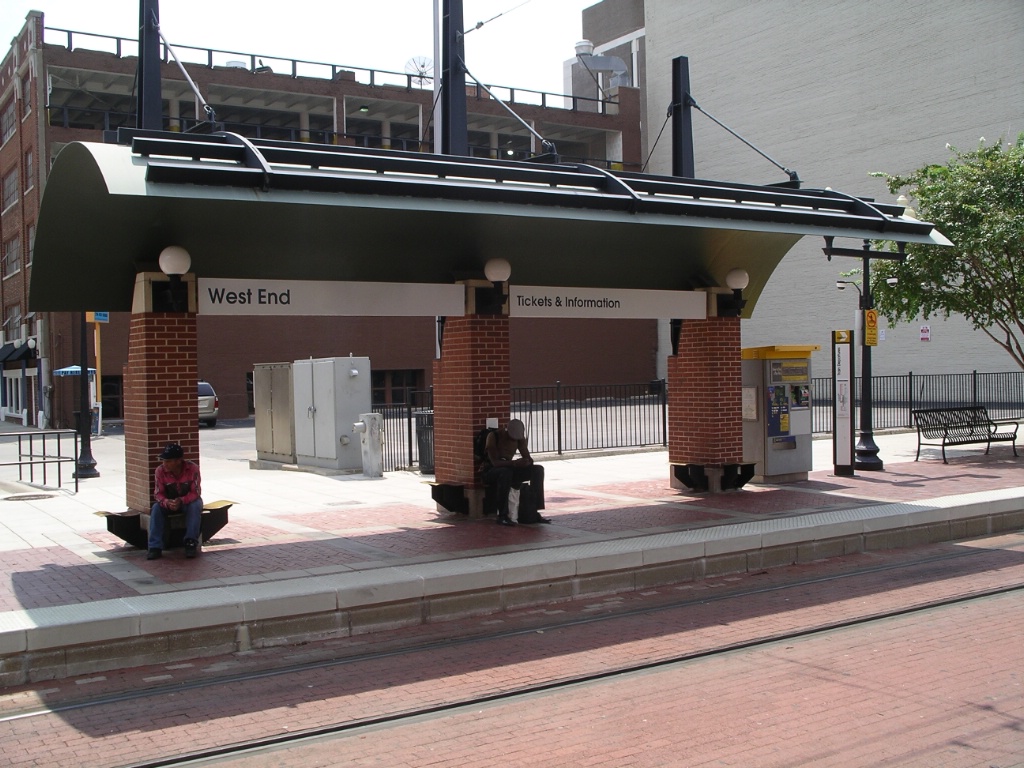
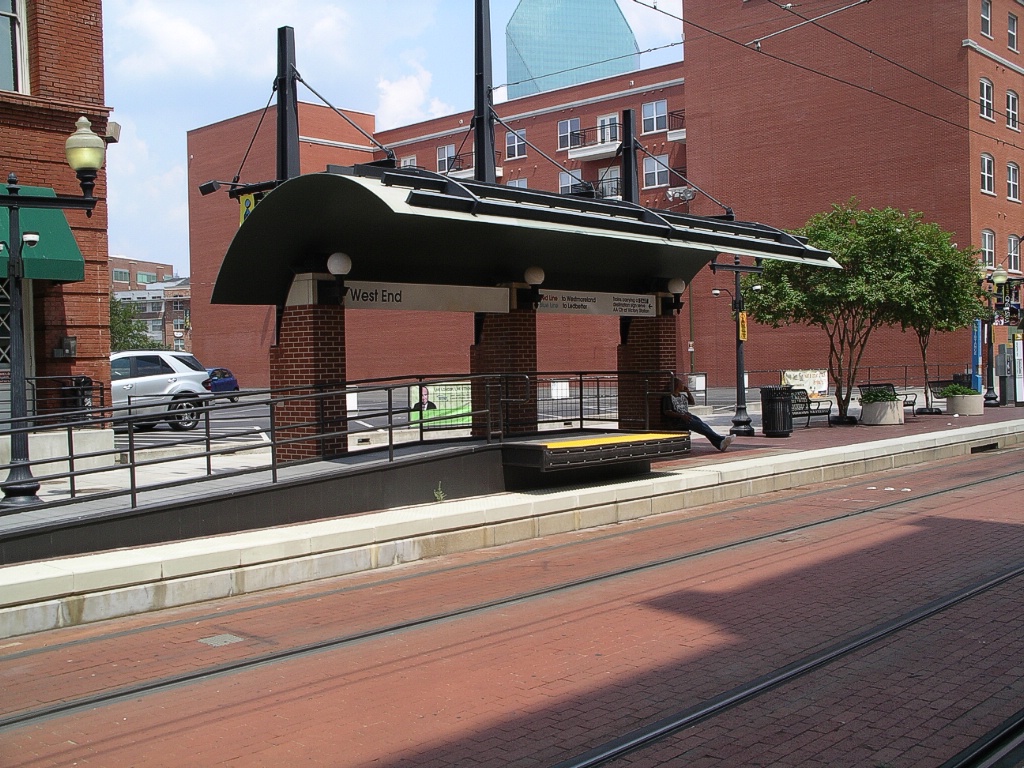
Compare this newer photo of West End station with the photo to the left of
Pearl station. The platform height in this photo has been raised.
|
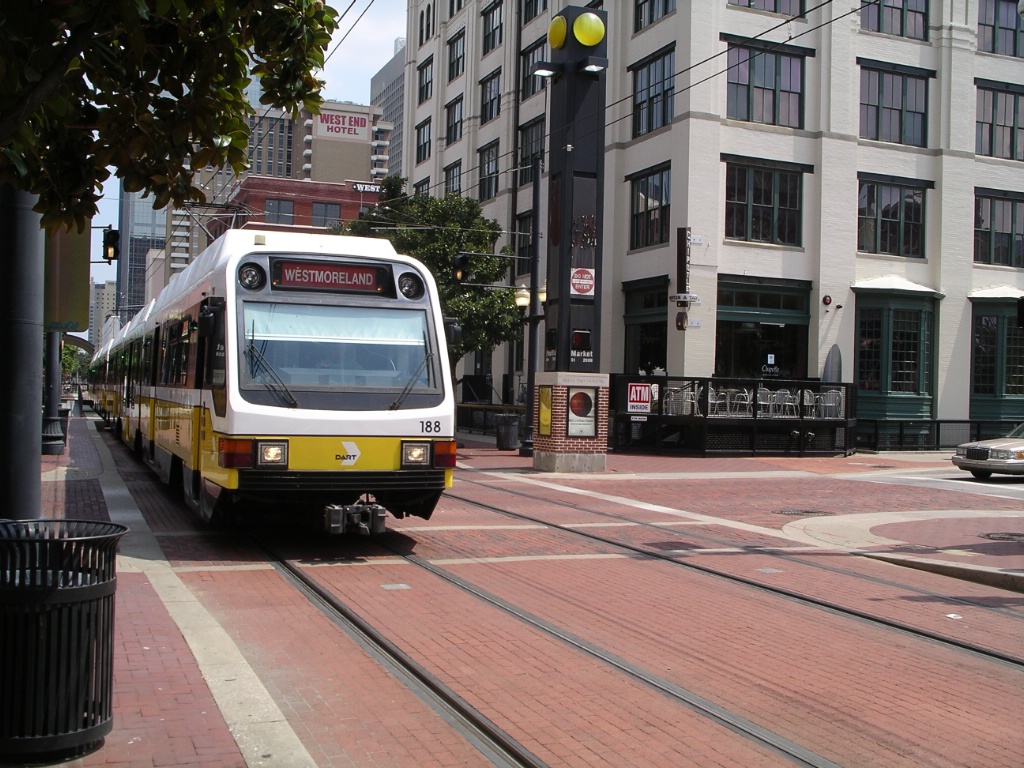
After emerging from the tunneled section, the Green Line joins this line before entering the downtown area and reaching the next station, Pearl. Pearl was the original northern terminus of both the Red Line and the Blue Line. As this was a terminus at one time, it has a centre island platform. The next two stations are St. Paul and Akard.
Heading southwest, the West End station is the last station before the branch to Victory station, located next to the American Airlines Center. Prior to the opening of the Green Line in September 2009, Victory station was only served for special events but is now served full time by trains on the Green Line and Orange Line. Victory station is also served by TRE.
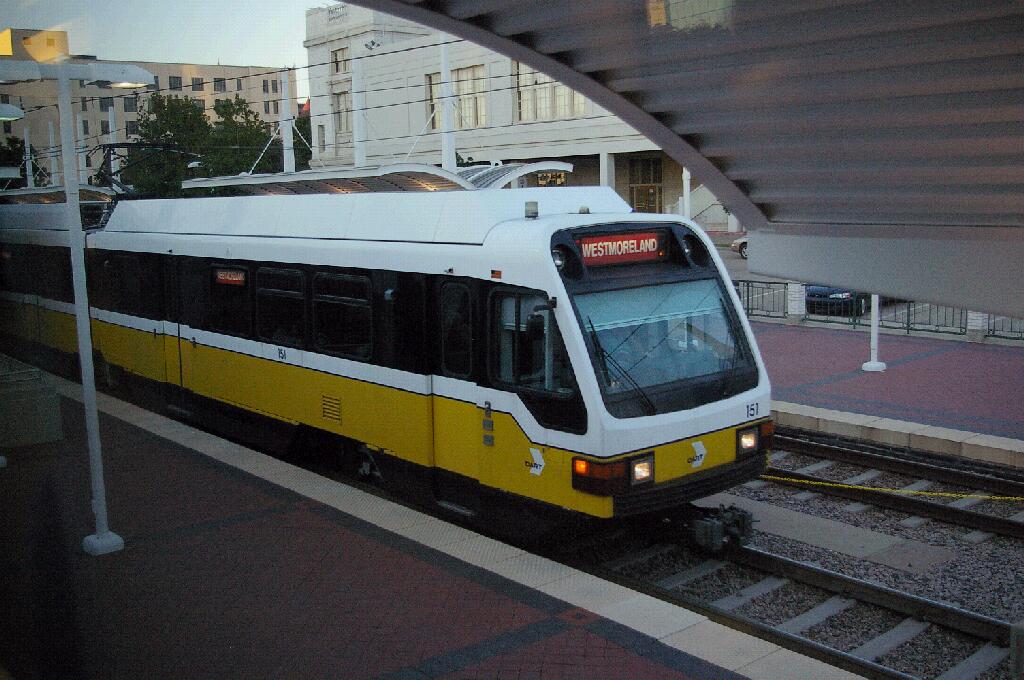
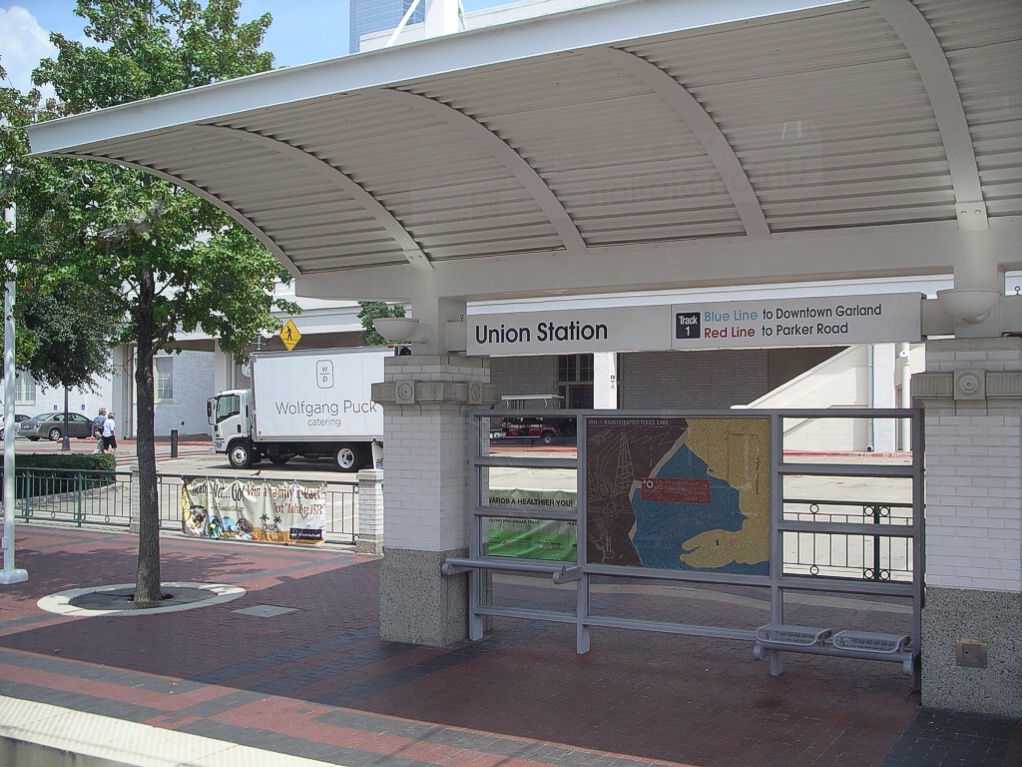
The curves to the left where the branch to Victory station curves to the right and continues to the next station, Union Station. This station is also served by Trinity Rail Express, Amtrak's Texas Eagle, and the Greyhound bus terminal. The LRT is served by side platforms, but the southbound platform is an island platform that also serves as the western terminus of TRE.
Passengers have easy across-the-platform access to TRE trains heading west to connect downtown Dallas with downtown Fort Worth. Passengers may transfer to TRE with a valide System or Regional fare (see Fares and Fare Collection).
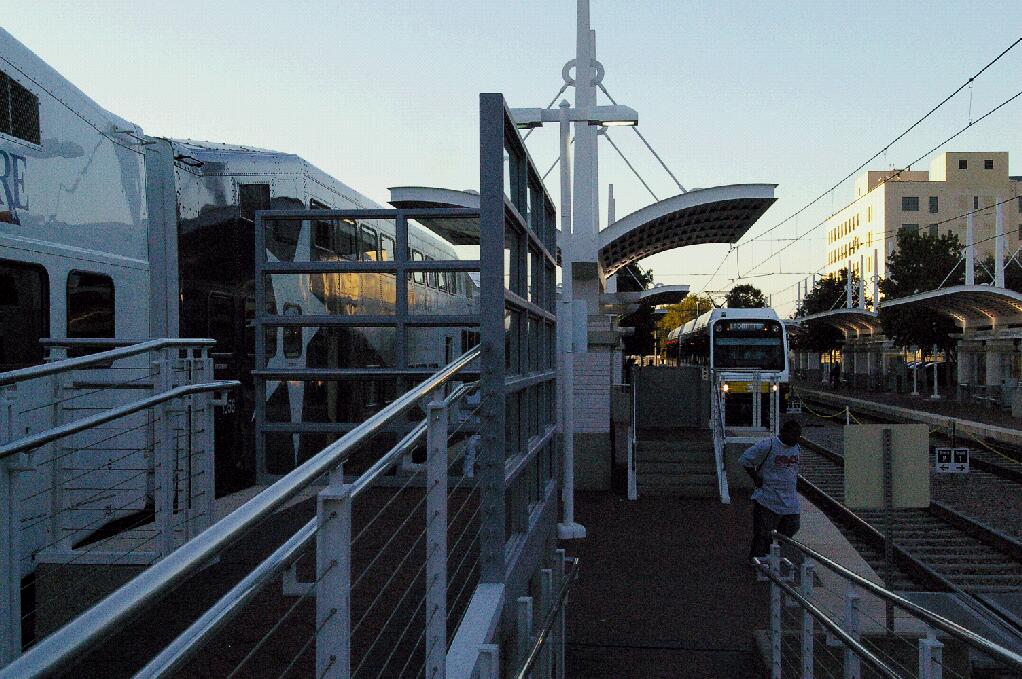
At Union station, on the left is a TRE train that will depart away from the
camera to Fort Worth and on the right is an arriving Blue Line to Ledbetter.
|
|
Northeast Blue Line
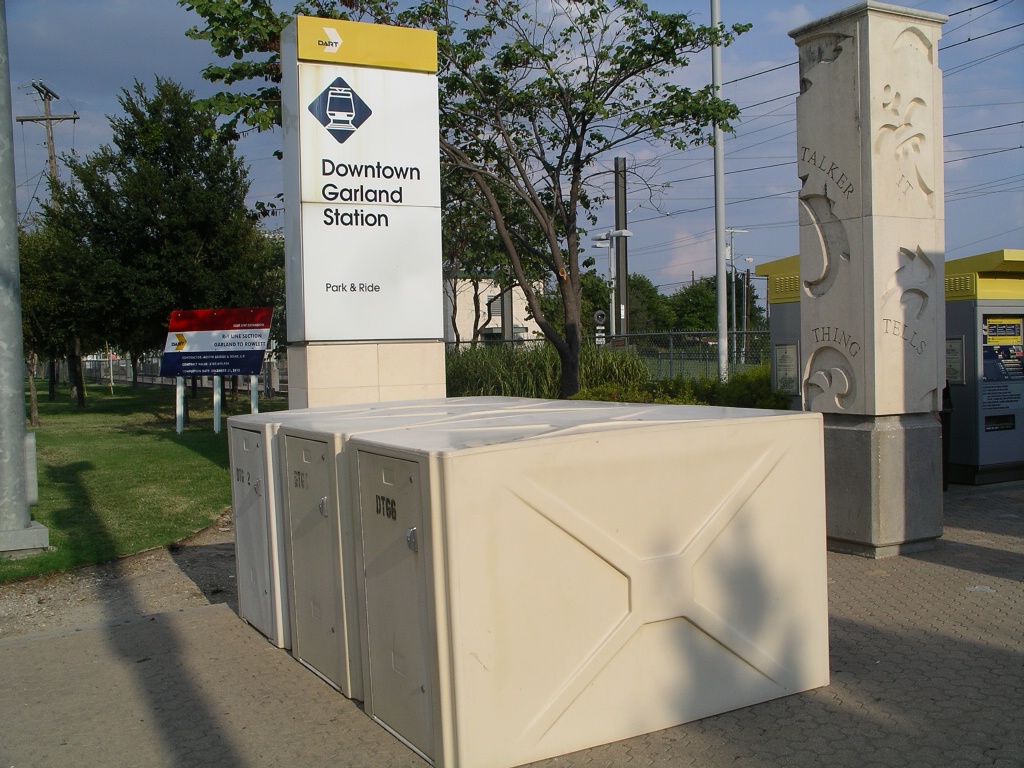
The entire trip on the Blue Line from Downtown Garland to Ledbetter takes approximately 58 minutes. The northeast section from Downtown Garland to Mockingbird takes about 18 minutes.
The Blue Line begins at Downtown Garland station, northeast of Dallas. The station has a centre platform.
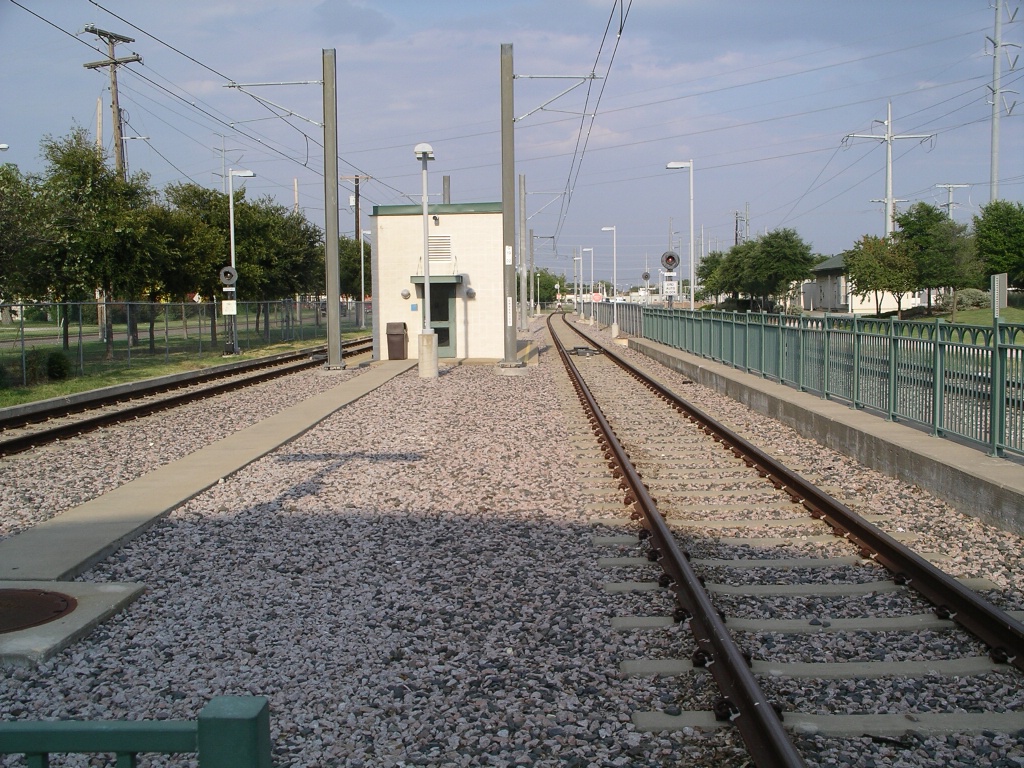
Beyond Garland station.
|
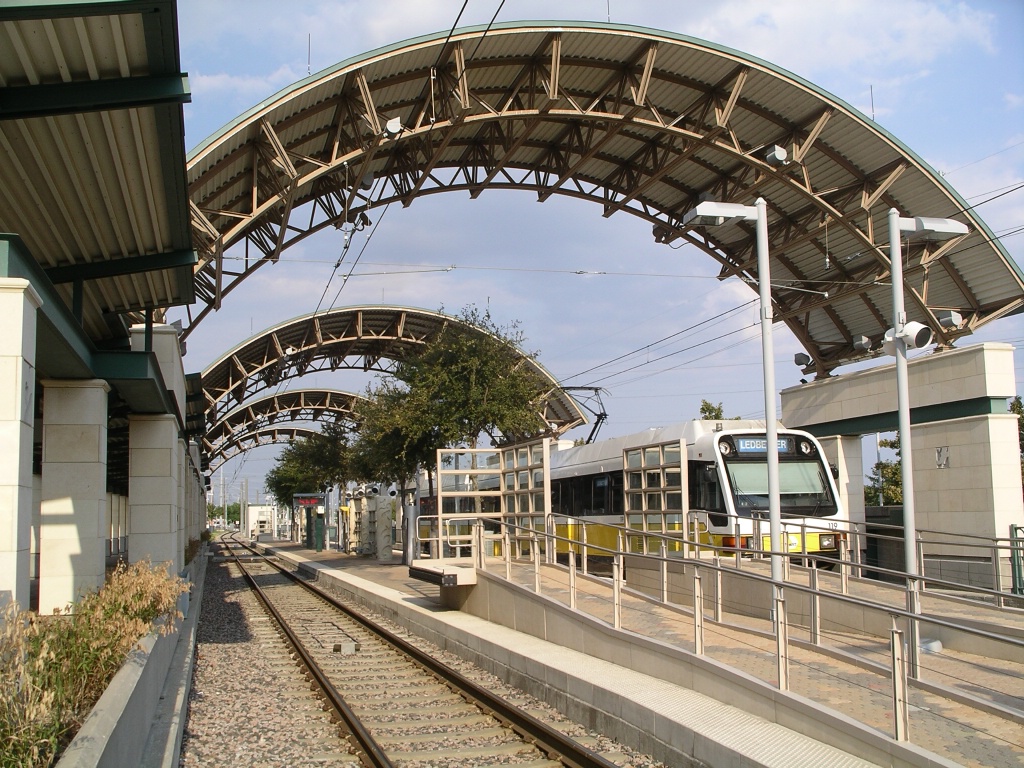
Garland station.
|
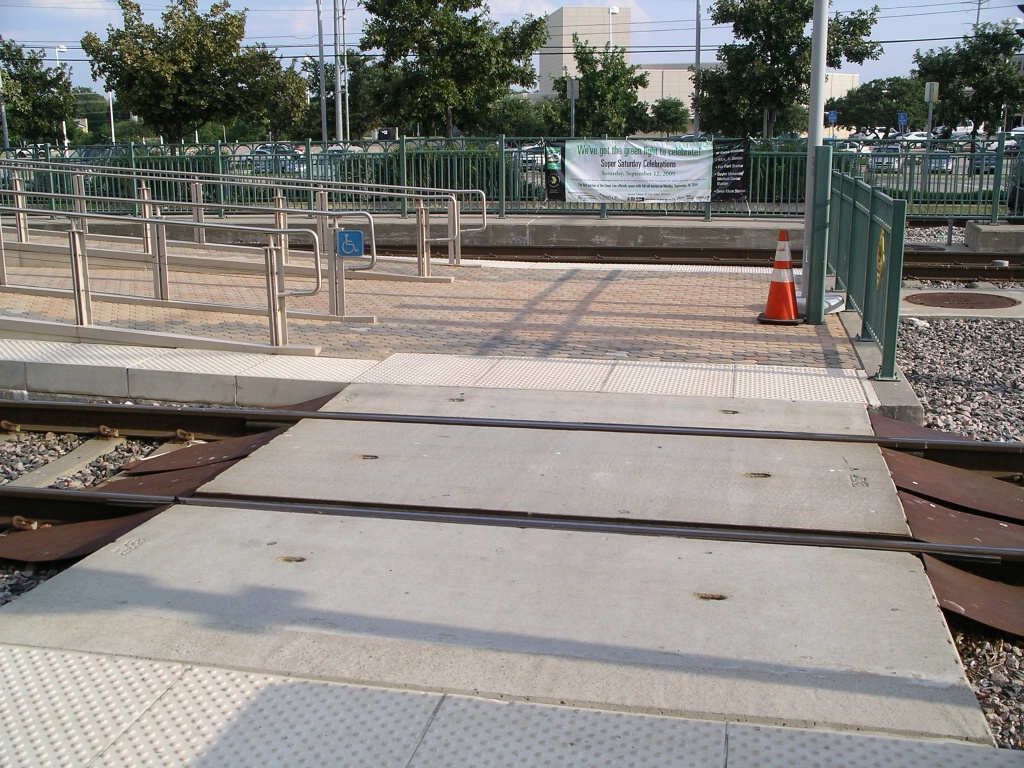
Pedestrian crossing at Garland.
|
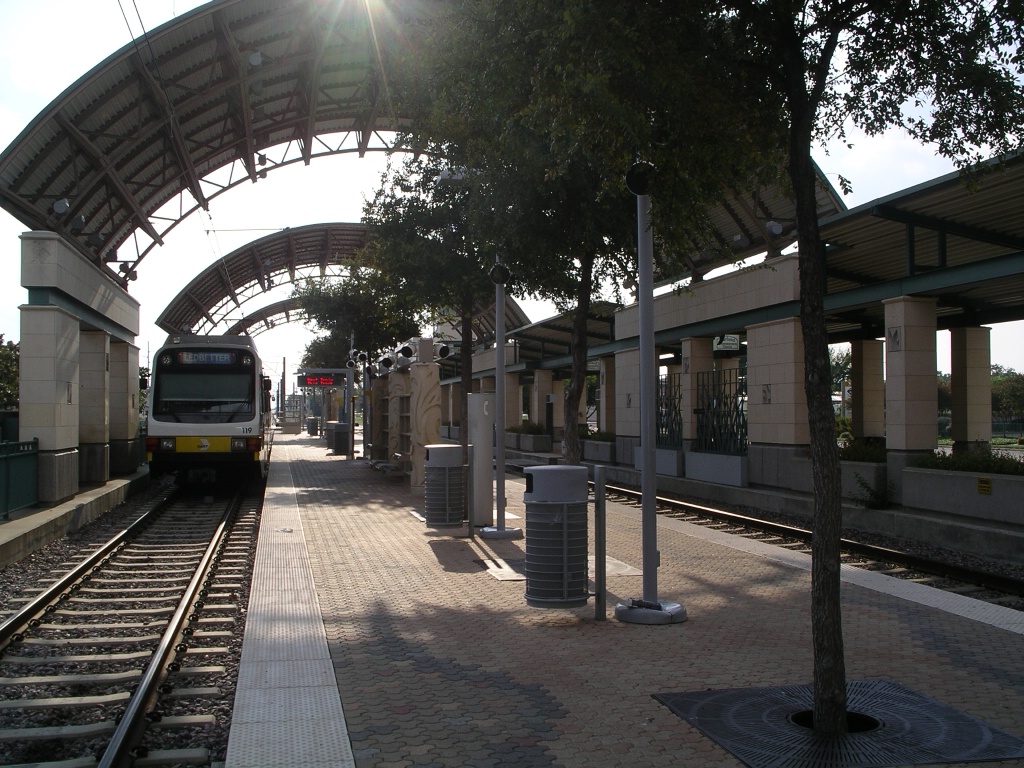
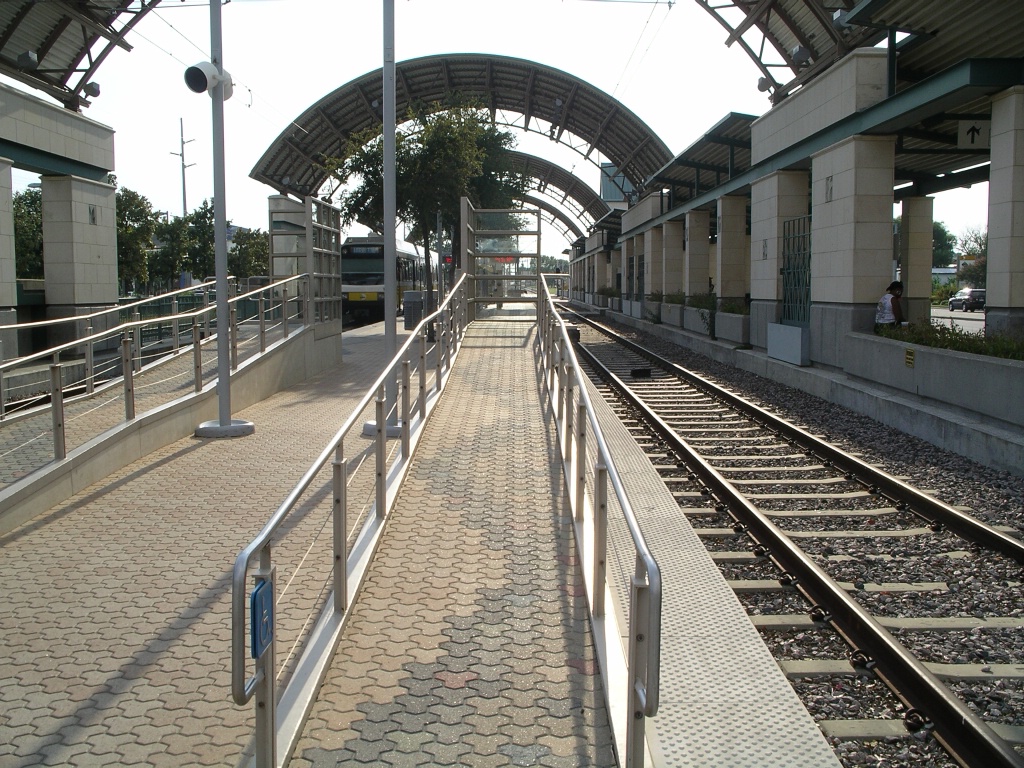
Other views of Garland station.
|
||
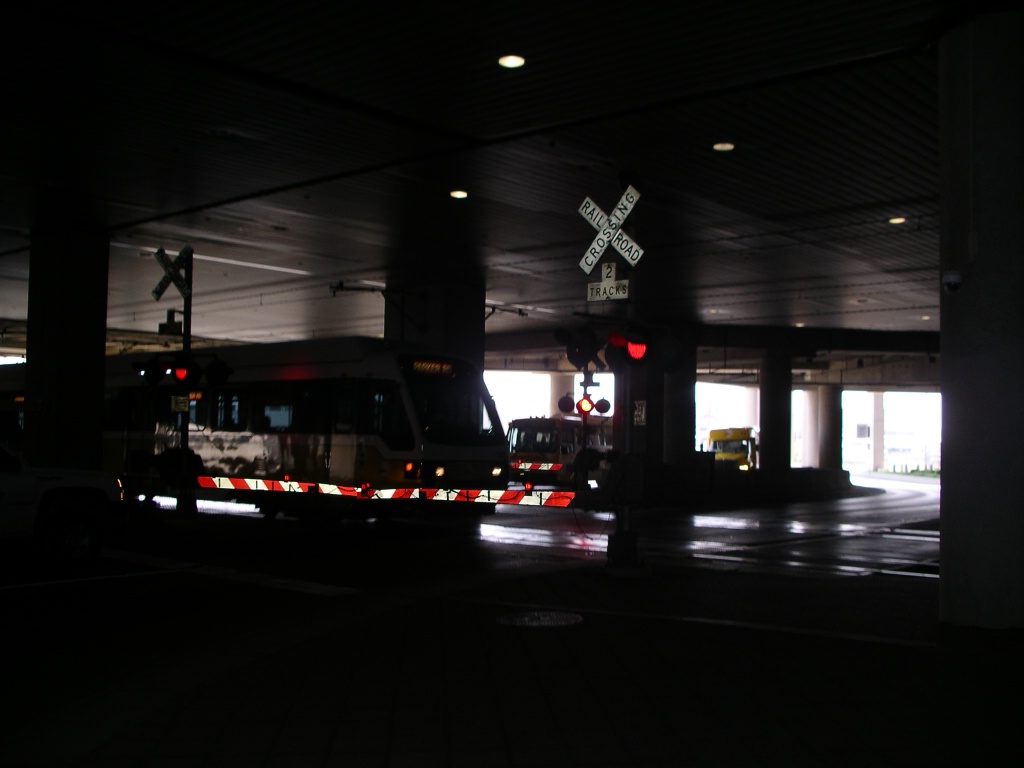
The route travels west and then southwest stopping at Forest/Jupiter, LBJ/Skillman, Lake Highlands, and White Rock station before interlining with the Red Line just before reaching Mockingbird station.
South Blue Line
The entire trip on the Blue Line from Downtown Garland to Ledbetter takes approximately 58 minutes. The south section from Union Station to Ledbetter takes about 21 minutes.
South of Union Station, the next station is Convention Center, which is within and beneath the Dallas Convention Center building. Following that is Cedars station which is an at grade station just south of the downtown core.
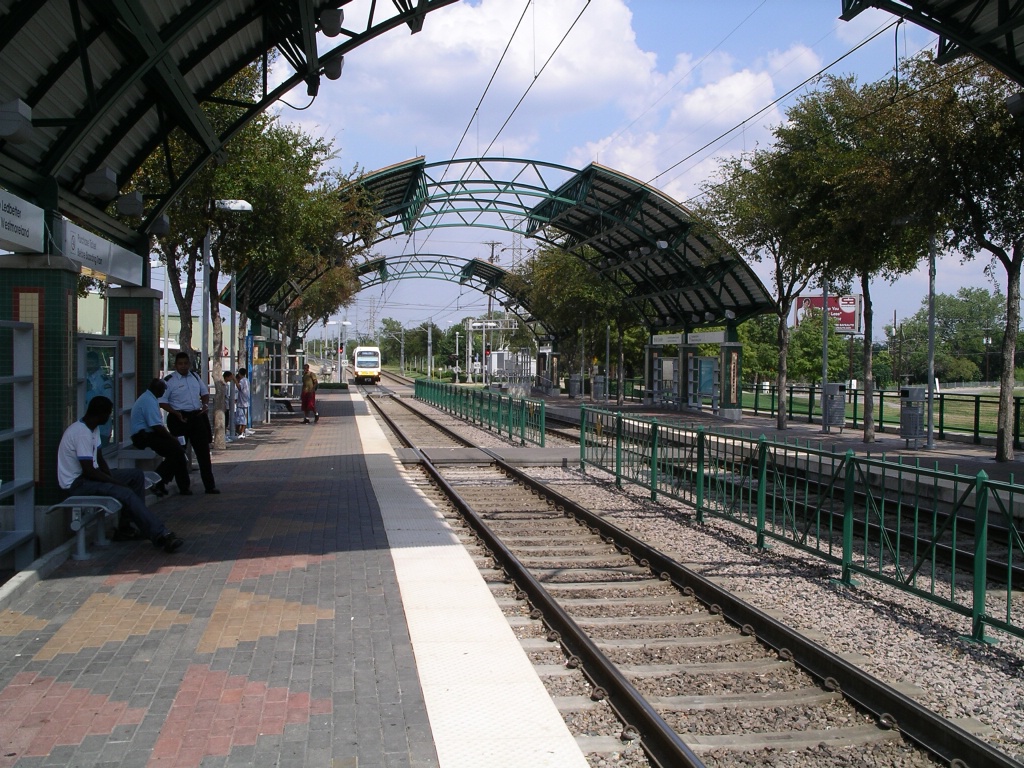
Just past this point, the line turns southwest and crosses the Trinity River. Speeds on this bridge are as high as 65 mph (or 104 kph). The next station is 8th and Corinth where just past this point, the Blue line trains turn south.
The line follows an electrical utility corridor, stopping at Morrell and Illinois station. Then a bridge takes the line over to the centre median of South Lancaster Road, stopping at Kiest and VA Medical Center station. Kiest is one of only two stations on this branch that has a centre island platform.
Just south of East Ledbetter Drive, the line crosses the southbound Lancaster lanes to Ledbetter station, located just west of the road. Ledbetter is the other station on this branch with a centre platform.
Southwest Red Line
The entire trip on the Red Line from Parker Road to Westmoreland takes approximately 66 minutes. The trip from 8th & Corinth to Westmoreland takes about 11 minutes.
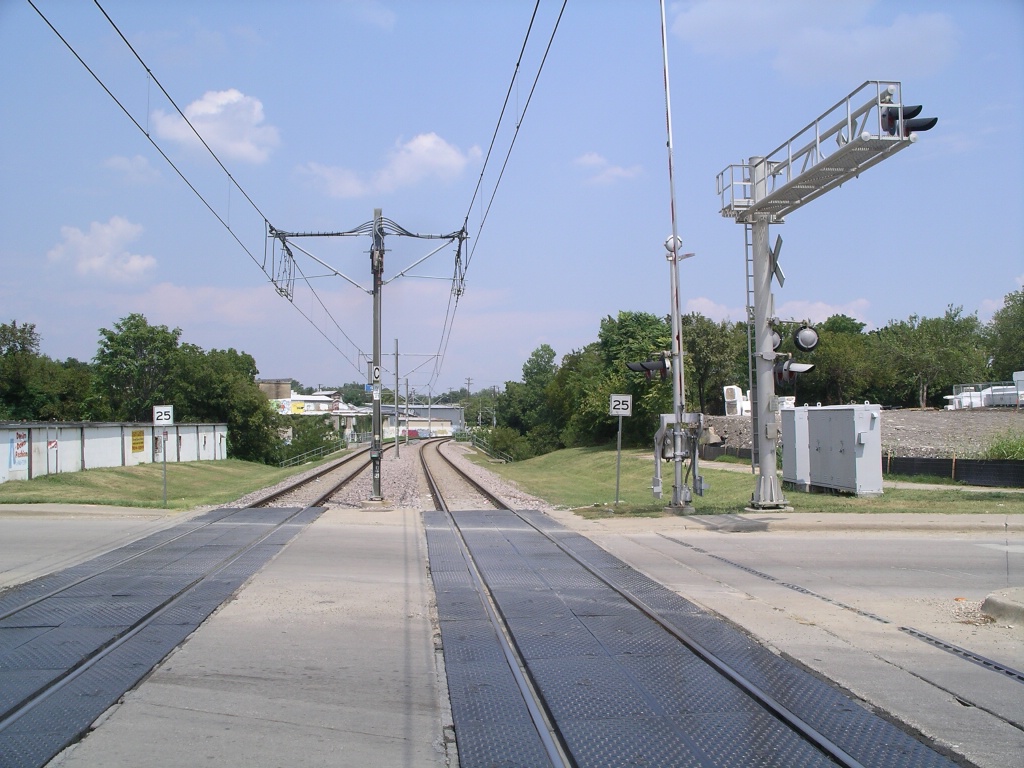
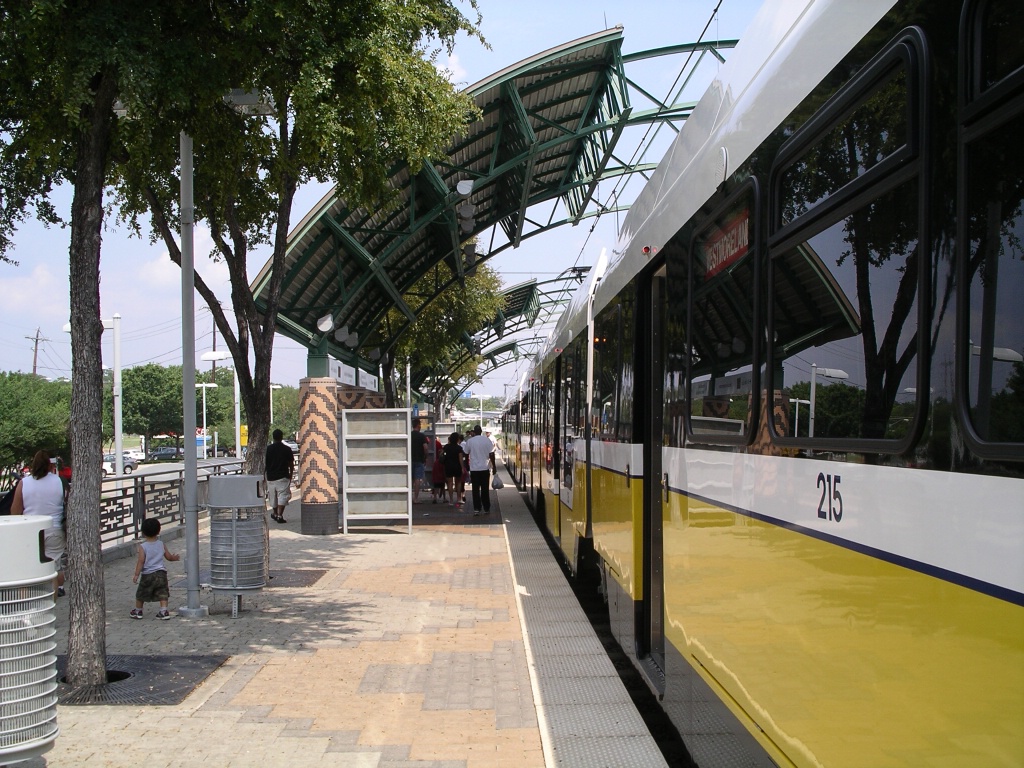
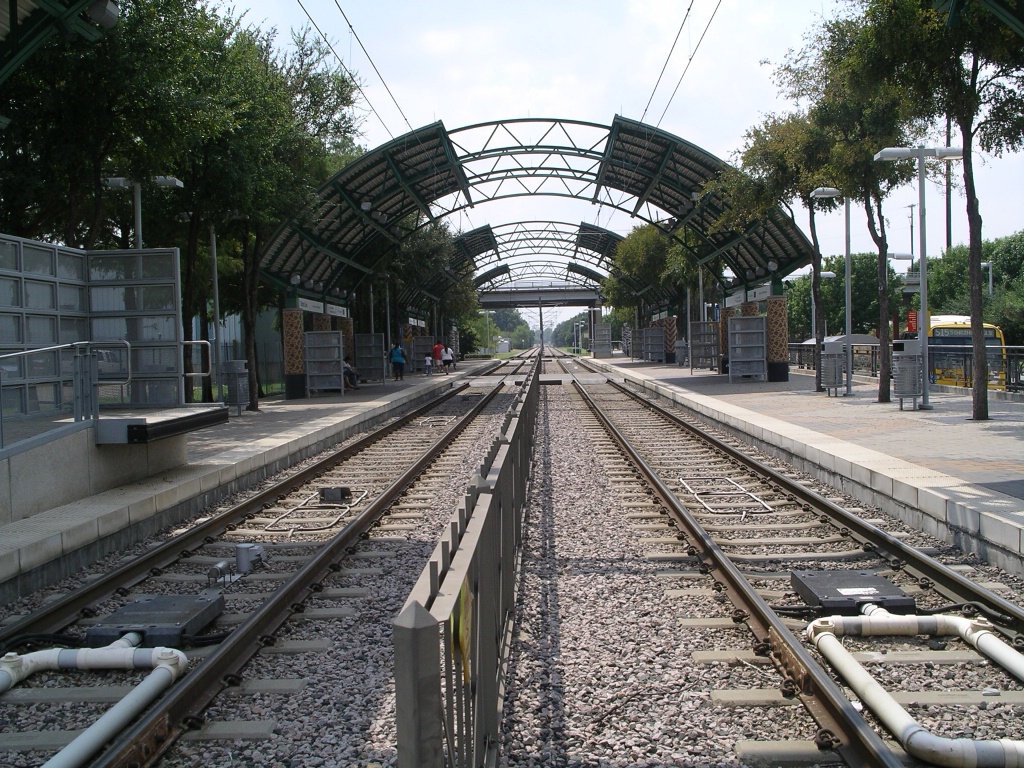
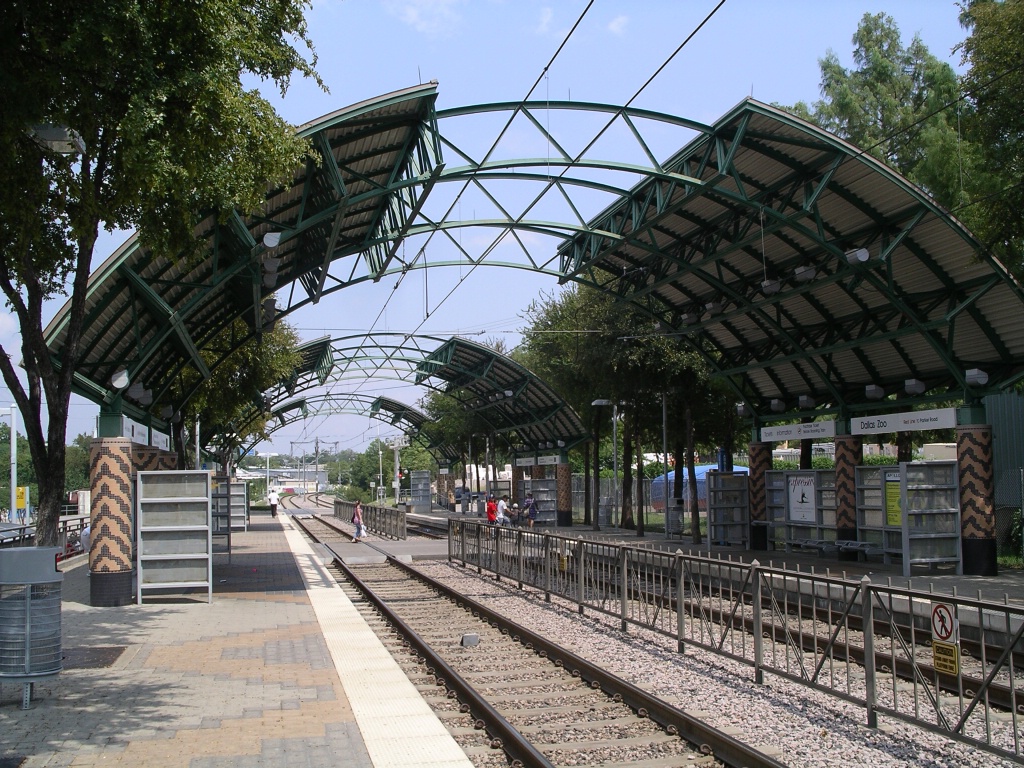
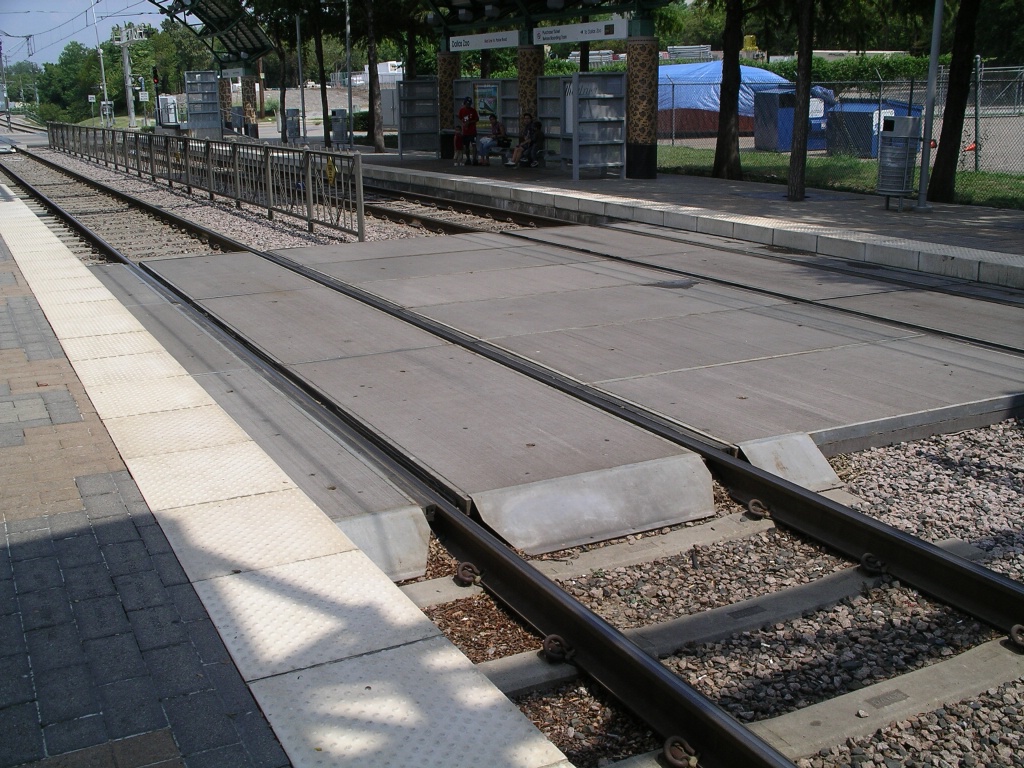
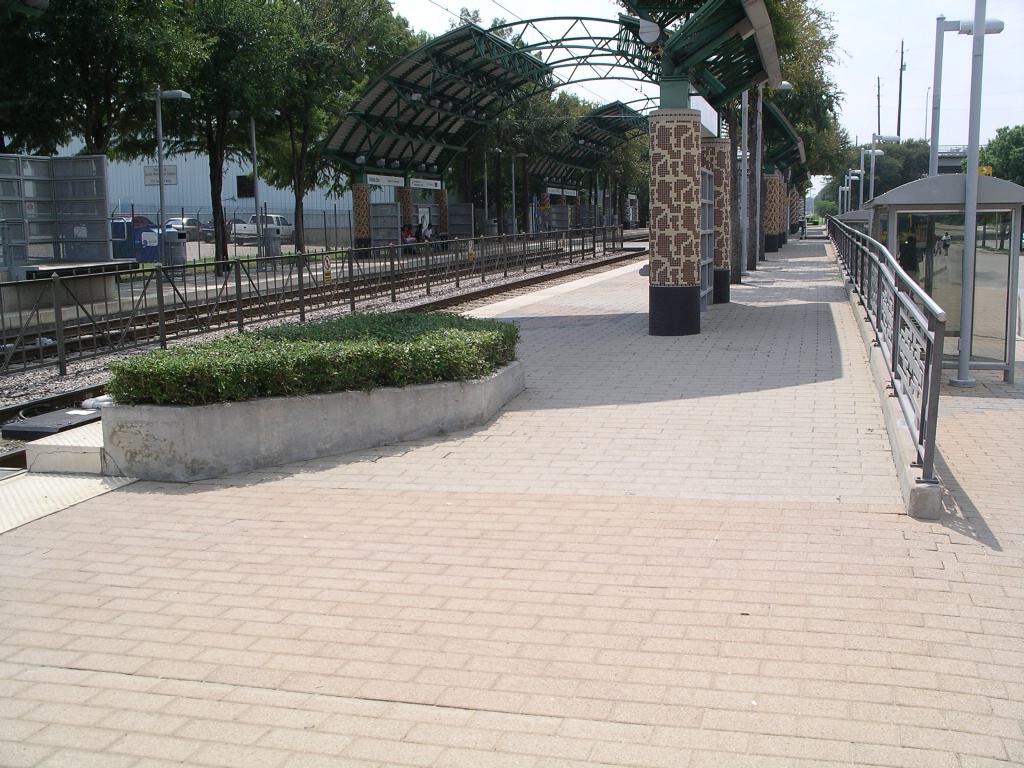
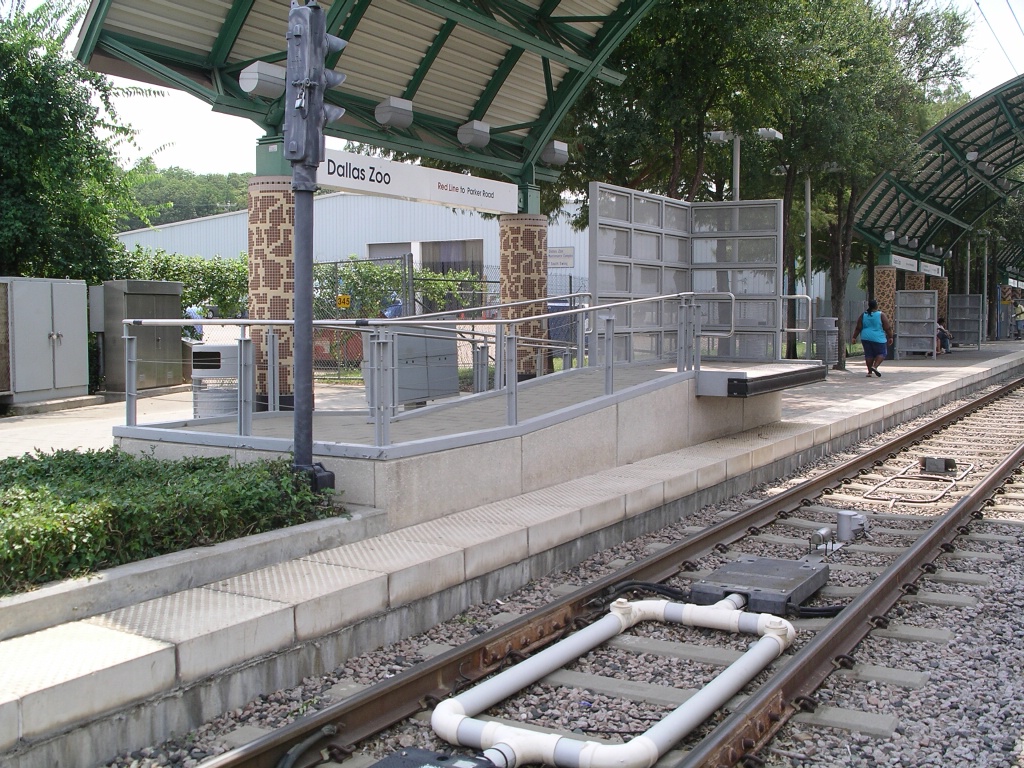
Dallas Zoo station.
|
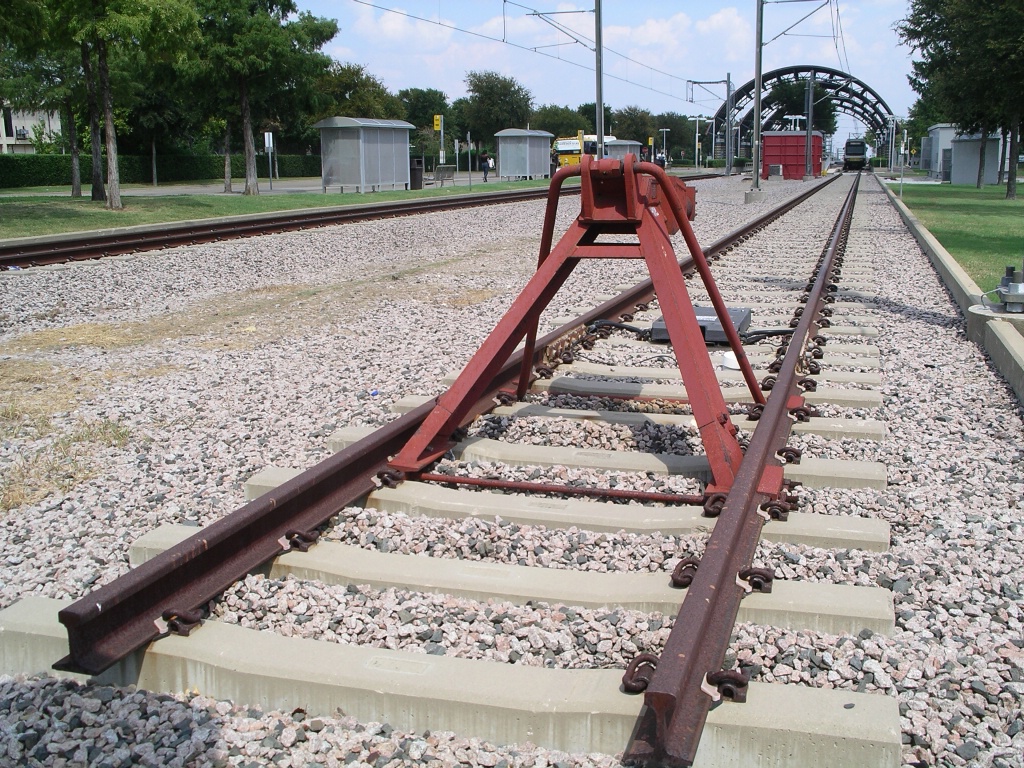
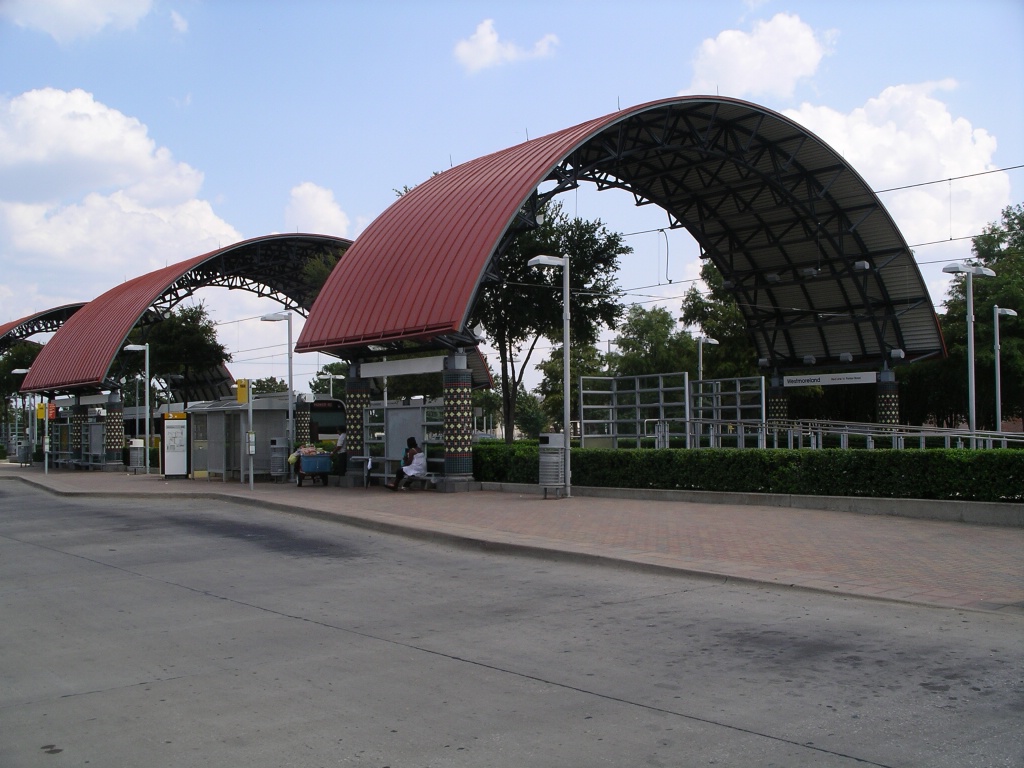
From 8th & Corinth, the red line continues in a southwest direction through Oak Cliff to Dallas Zoo station.
After Dallas Zoo, the next station is Tyler/Vernon, followed by Hampton. The southern end of the Red Line is the next station, Westmoreland.
North Green Line
The entire trip on the Green Line from North Carrollton/Frankford to Buckner takes approximately 75 minutes. The trip from North Carrollton/Frankford to Victory takes about 37 minutes.
Description not available. Information and photos are welcomed - please email here.
Southeast Green Line
The entire trip on the Green Line from North Carrollton/Frankford to Buckner takes approximately 75 minutes. The trip from Pearl to Buckner takes about 26 minutes.
Description not available. Information and photos are welcomed - please email here.
Fares and Fare Collection
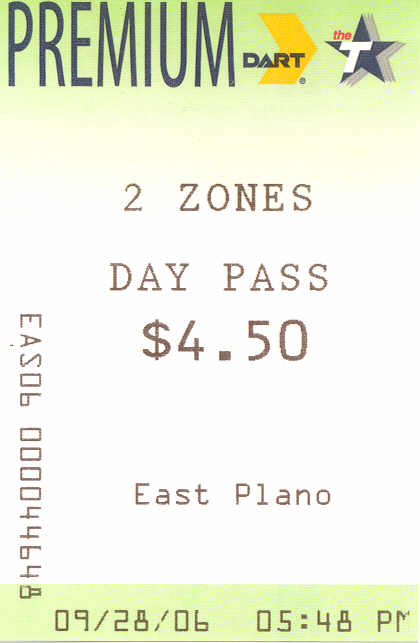
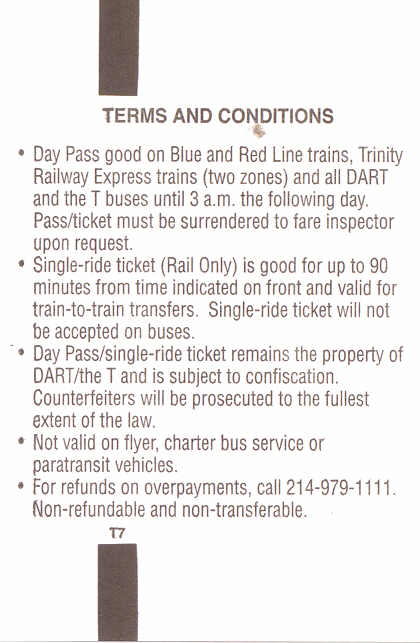
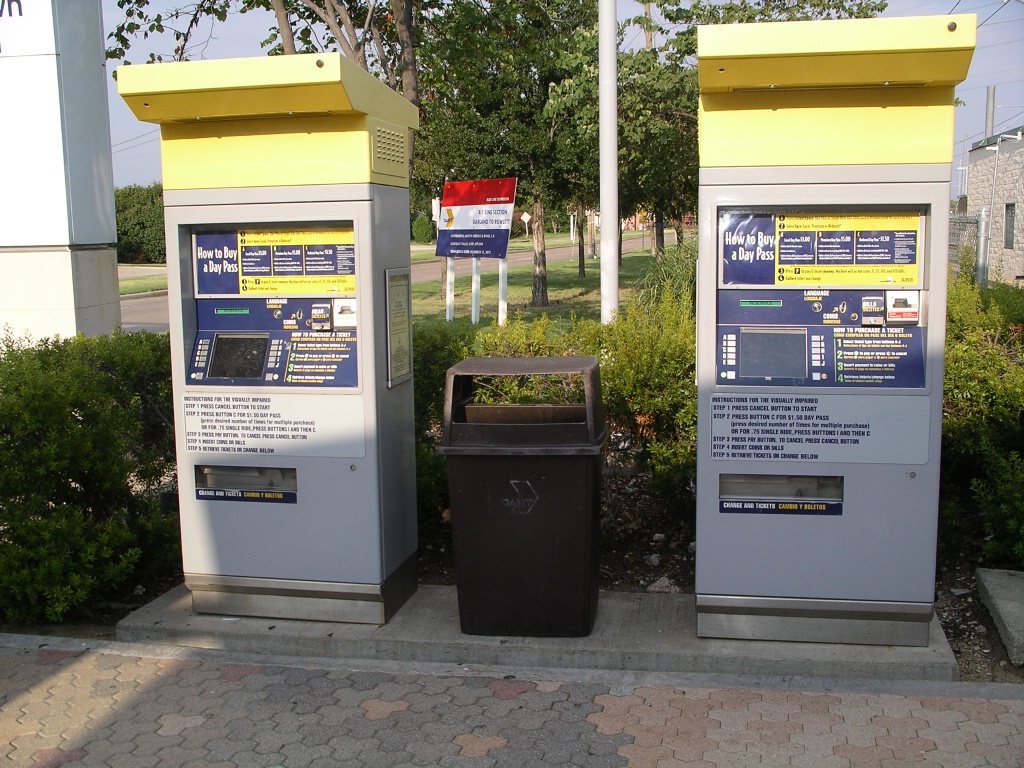
Fares may be purchased from vending machines on platforms.
"Single ride" fares have been replaced with a 2-hour pass. A "Local" version of this (bus and rail within DART's operating zone) is US$2.50.
A local day pass is US$5.00.
A local mid-day pass, usable for unlimited rides between 9:30 am until 2:30 pm, sells for $1.75
A "regional" fare allows for travel within DART, FWTA, and DCTA service areas. It costs US$5.00 for a 2-hour pass, US$10.00 for day pass, or US$3.50 for a mid-day pass.
7-Day Passes are the cost of five days: US$25 for local, or US$50.00 for regional.
A 31-Day pass is available for US$80 for local, or US$160 for regional.
Random fare inspections take place on the LRT. Fare evaders are issued a citation that may be disposed of without a declaration of guilt if an "administrative fee" of US$100 is paid within 30 days. Otherwise, a Class C misdemeanor violation with a fine not to exceed US$500 may apply.
Accessibility
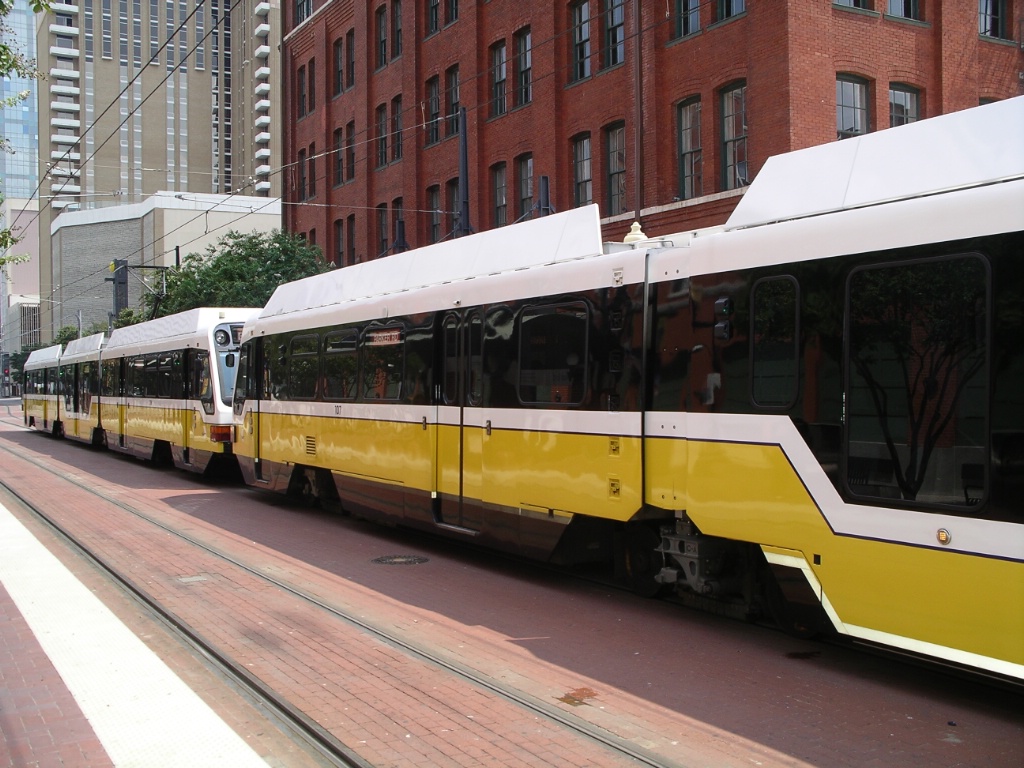
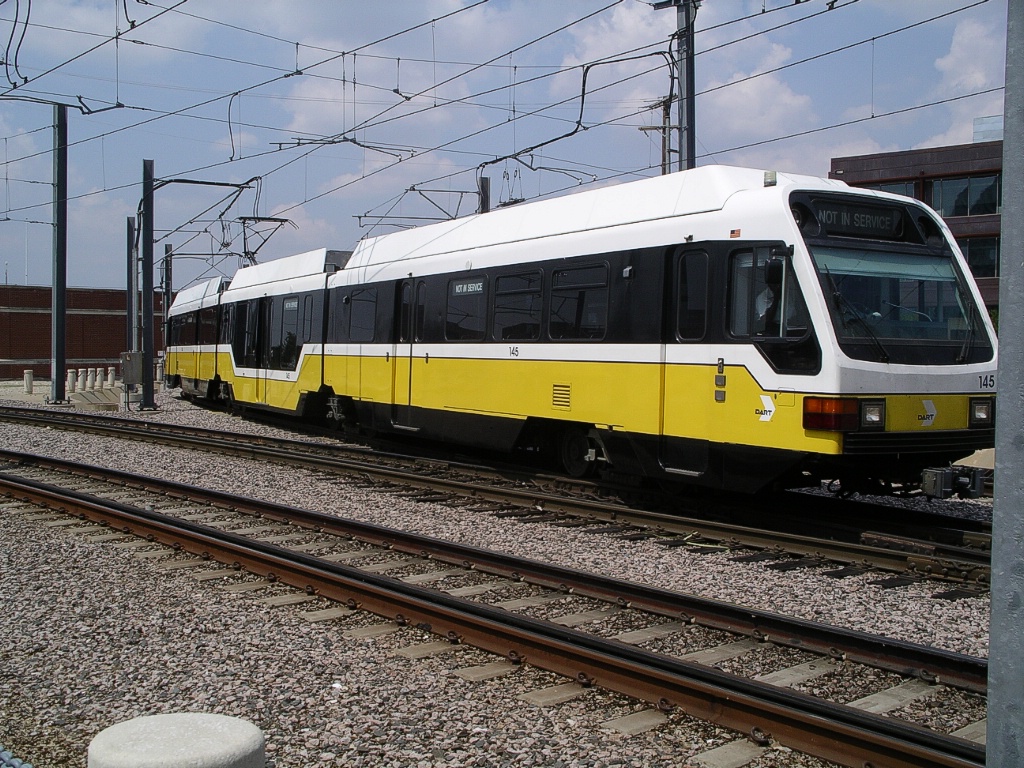
Originally, a high level platform positioned for the front door was used for accessible boarding. A few years ago, a small centre section with a low floor for the vehicles was developed and retro-fitted to the entire fleet. A slight raising of platforms was needed to accommodate a level boarding to the new sections of the vehicles.
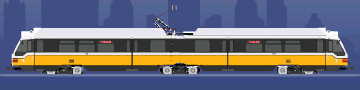
Original DART LRT with "A" and "B" sections.
|

Current DART SLRT with "A", "C", and "B" sections.
|
Other Notes
Most DART Rail stations have side platforms. Ten stations have a centre island platform. Six of the island platforms are at stations on the northern branch of the Red Line. When parking is available at stations, it is free but overnight stays are not permitted.
|
||
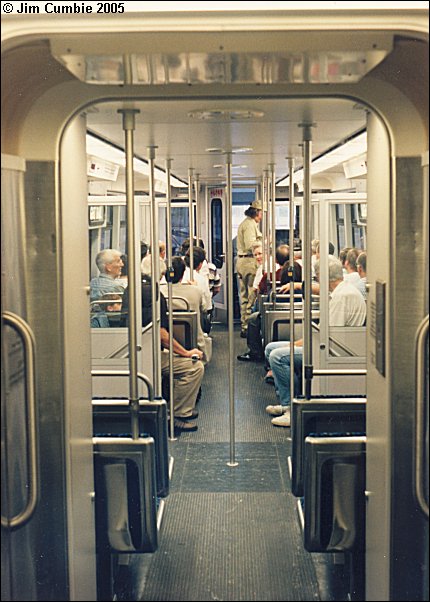
Interior view from articulation towards end.
|
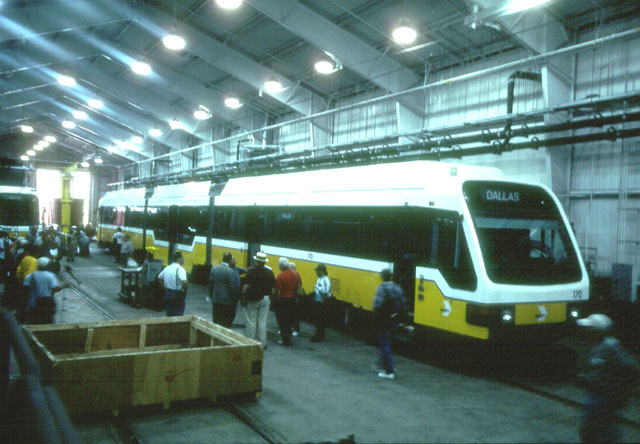
Interior view from one end.
|
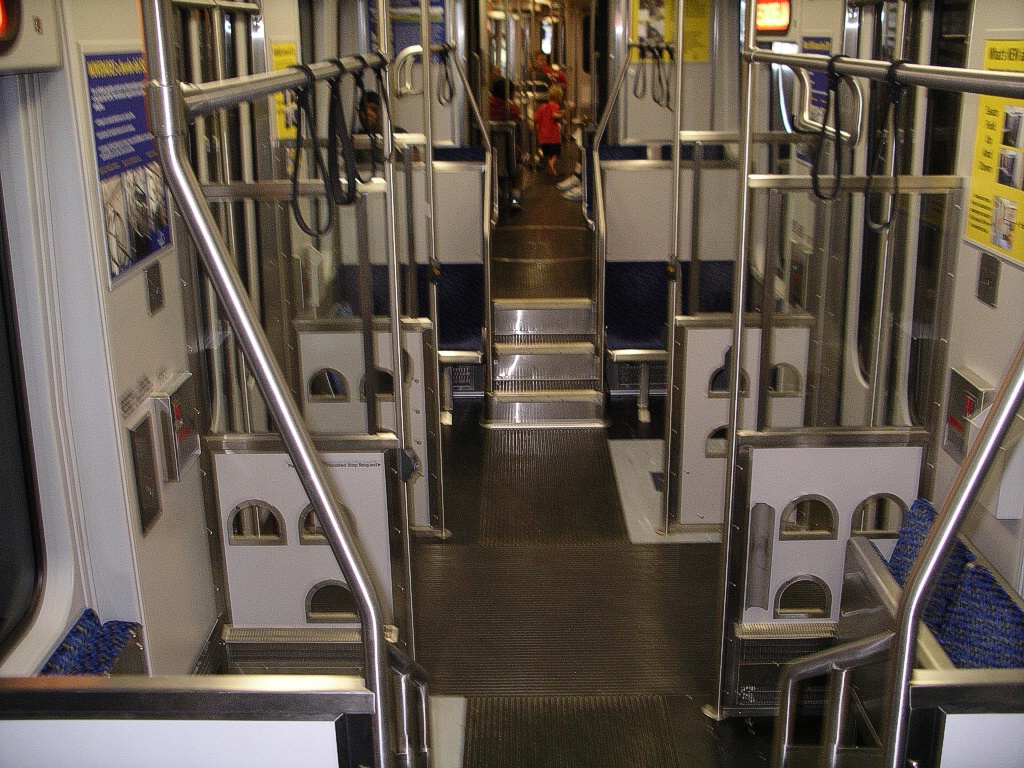
Interior view from articulation towards low floor section.
|
Current and Planned Expansion
Orange Line
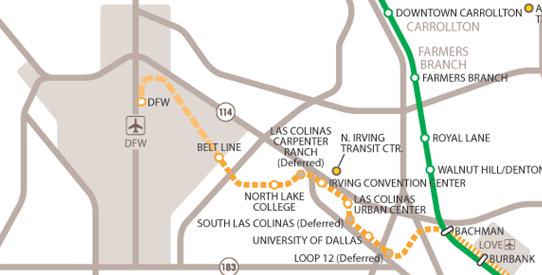
Construction is underway on the 22.4 km Orange Line branching westward from the Green Line at Bachman station.
The first 8.1 km section with three stations to Irving Convention Center opened on July 30, 2012. The next 6.2 km section to Belt Line opened December 3, 2012.
The final 7.5 km to DFW Airport is expected to open on December 15, 2014.
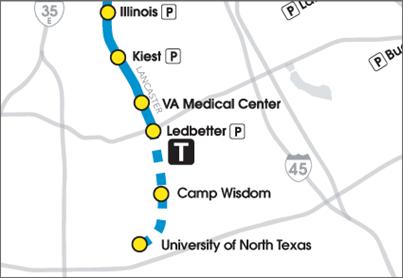
Blue Line South
Currently planned, a 4.8 km southern extension of the Blue Line will add two stations in 2019. Construction is expected to begin in 2013.